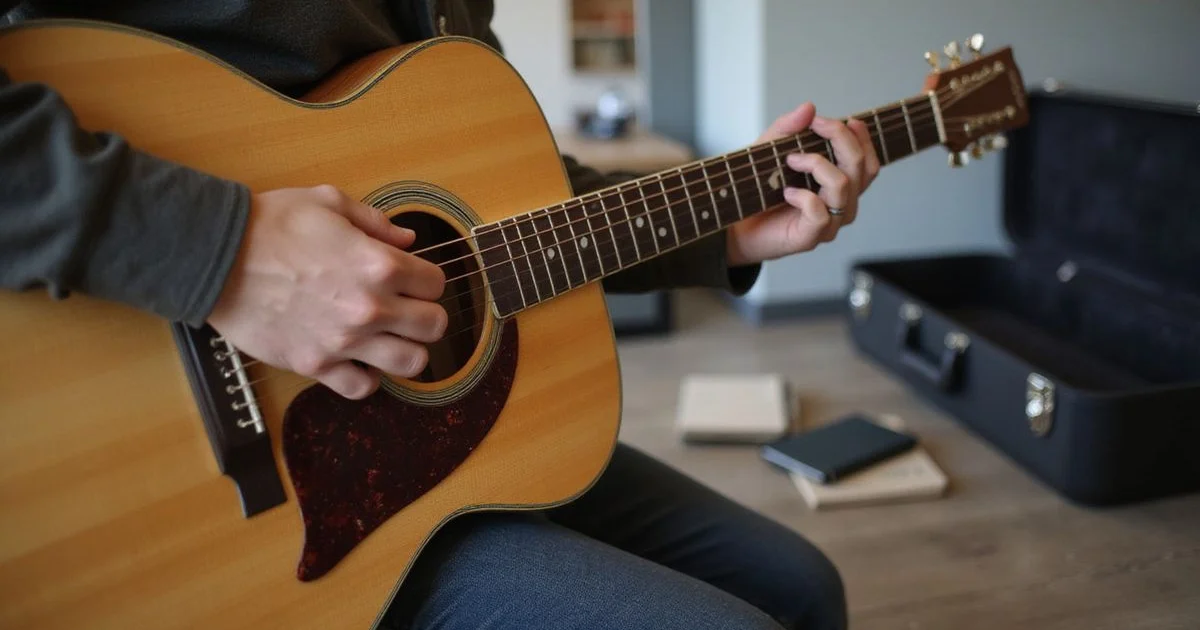
Start With the Thumb
Fingerpicking has one foundational skill that almost everyone skips, and it’s the first thing addressed when the technique comes up in acoustic guitar lessons: the thumb has to run on autopilot.
In Travis picking and most folk fingerstyle, the thumb keeps a steady alternating bass on the lower strings while the fingers play melody on top. If the thumb needs your attention, there’s none left for anything else, and the pattern falls apart the moment the melody gets interesting.
So the first exercise is the least glamorous one available. Hold a single chord. Alternate the thumb between two bass strings, evenly, for two minutes. Do nothing else. Do it until it feels like walking.
Building the Pattern in Layers
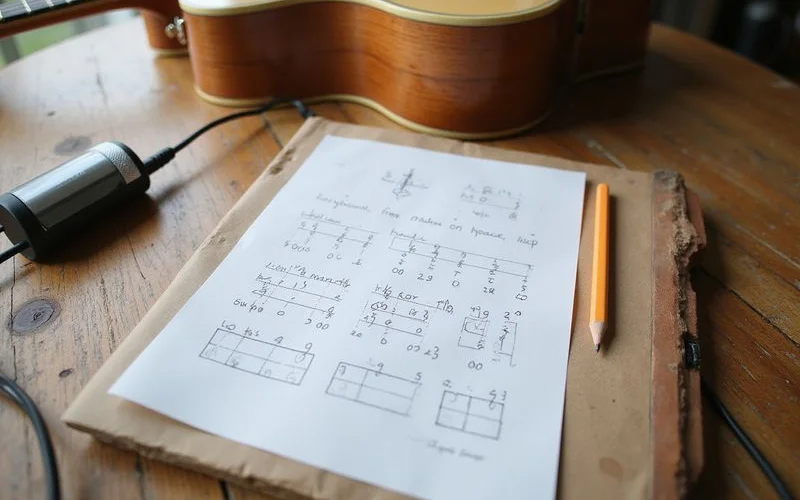
Once the thumb runs itself, add one thing at a time:
- Thumb alone, alternating, steady. Two minutes.
- Thumb plus one finger on the same beat. Simple, and it already sounds like music.
- Thumb plus one finger off the beat. This is the hard step and the one worth slowing down for.
- Add the second finger. Now you have a real pattern.
- Change chords while the pattern runs. The final test, and where most people discover their chord changes weren’t as solid as they thought.
Each layer should be comfortable before the next one arrives. Rushing here produces a pattern that works on one chord and collapses on a song.
The tempo rule
If the pattern isn’t even at slow speed. It will never be even at full speed. Fingerpicking exposes timing more brutally than strumming does, because every note is separately audible.
Right-Hand Setup
Keep it simple. Thumb handles the lower strings, index and middle handle the higher ones, wrist relaxed and roughly parallel to the strings. Anchoring lightly with the ring finger or palm is fine to start and easy to let go of later.
Nails aren’t necessary. Fingertip flesh gives a warmer, rounder tone that suits most folk and singer-songwriter material, and it means no maintenance.
Starter Patterns Worth Knowing
Three patterns cover a large amount of folk and singer-songwriter material.
Alternating bass, thumb only. The foundation. Not a pattern so much as the engine everything else sits on.
Thumb plus index on the beat. Simple, full, and immediately usable under a chord progression.
Alternating bass with a syncopated melody note. The classic Travis feel. Harder, and the one worth taking slowly.
Learn one properly rather than three approximately. A single pattern played cleanly under changing chords sounds far better than three played unevenly.
Practising Without a Song
Fingerpicking rewards short, frequent sessions more than most techniques, because it’s almost entirely motor learning. Five minutes daily beats forty minutes on Sunday by a wide margin.
Practise it while doing something else, once the basic movement is there. Holding one chord and running the thumb pattern while watching television is a genuinely effective use of time, because the whole goal is getting the thumb below conscious attention. It’s one of the few guitar exercises that works better when you’re not concentrating.
When to Start
After strumming and chord changes are steady, usually a couple of months in. Fingerpicking layered on top of unreliable chord shapes stacks two problems and slows both down.
Once it clicks. It opens up the repertoire most people wanted an acoustic for in the first place, arrangements where one guitar covers bass, chords, and melody simultaneously. That’s where the acoustic repertoire path leads, and it’s a core part of the acoustic guitar lessons sequence.
A note on patience: fingerstyle is the technique where being taught slowly and correctly saves the most time. Habits formed rushing it, uneven thumb, tense wrist, fingers that only work on one chord, take months to unlearn and weeks to avoid.