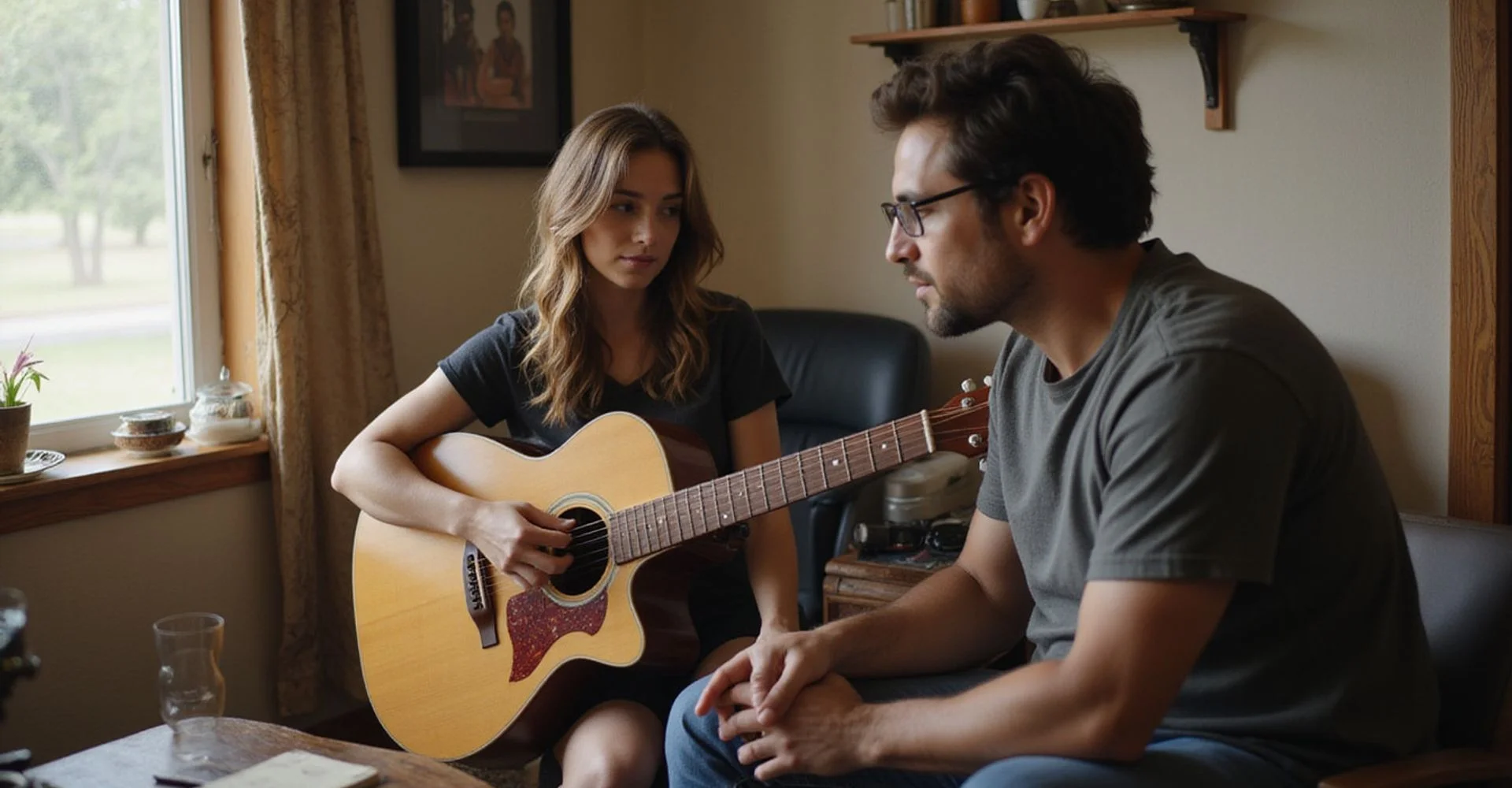
Beginner Guitar Lessons in Austin - Zero to Your First Song
Private beginner guitar lessons in Austin - what the first eight weeks cover, what gear you need, and how quickly you play a real song.
- star 5.0 · 70+ Google reviews
- verified Taught by a gigging musician
- event_repeat Month-to-month, no contract
What 8 Weeks of Beginner Guitar Lessons Look Like
Sameer Saleem has taught beginner guitar at Austin Guitar Lessons since 2016, working out of the East Riverside studio in southeast Austin. With a 5.0 rating across 70+ Google reviews, most students play their first full song within a month. Here’s what the first eight weeks cover.
Weeks 1-2. In your private lessons, you learn how to hold the guitar so your fretting hand isn’t fighting you, tune with a clip-on tuner, play your first open chords, and land one clean strum in time. Reading chord charts starts here too, since it’s the notation you’ll use most.
Weeks 3-6. Chord transitions - where nearly everyone stalls - plus strumming patterns and getting comfortable with a pick versus fingers. Whether your first song is a blues shuffle, a rock riff, or an acoustic folk tune, you play it start to finish somewhere in this stretch. Simplified, but complete.
Weeks 7-8. A second and third song. The first look at barre chords, and a practice routine that fits your actual week rather than an ideal one.
Nobody moves at exactly this pace, and that’s fine. It’s a map, not a schedule. Remote students follow the same curriculum over video. If you’re weighing up when to begin, starting guitar this fall in Austin covers why September tends to be the easiest month to build the habit.
What Gear Do New Guitar Players Actually Need?
A beginner guitar, a clip-on tuner, and a capo. That’s the list.
You don’t need a pedalboard, a second instrument, or an expensive guitar. What matters far more than price is guitar setup and action - how far the strings sit off the fretboard. A cheap guitar set up well is easier to learn on than an expensive one that isn’t, and string gauge makes a bigger difference to sore fingertips than most beginners realize. The East Riverside studio has amps, spare guitars, and accessories for in-person sessions, so you can try gear before buying anything.
Whether you lean toward acoustic guitar or electric guitar is a preference, not a hierarchy. Acoustic needs nothing else and is slightly harder on the fingers. Electric is easier to fret but adds an amp. Pick the one that made you want to play in the first place.
How to Practice So It Actually Sticks
Common beginner mistakes are almost all about attention rather than time. Repeating a chord change forty times while thinking about something else does very little; ten deliberate repetitions where you notice which finger lands late does a lot.
Metronome practice comes in earlier than most people expect, because timing problems set as hard as technique ones. It doesn’t have to be joyless - playing along to a song at half speed does the same job.
Finger pain and calluses are a normal phase, usually two to four weeks of regular playing. If it lasts beyond that, say so in a lesson. It’s usually the instrument.
Applied Music Theory for New Guitarists
You don’t need to study theory to play guitar, and you shouldn’t front-load it. What helps is applied theory arriving exactly when it explains something you’re already doing, why those three chords sound finished together, why a capo moves the whole song, why the fourth chord in the song you picked feels like it resolves.
That’s the approach on the music theory lessons page too, just at a deeper level for players who are already past the beginner stage.
Playing With Other Musicians in Austin
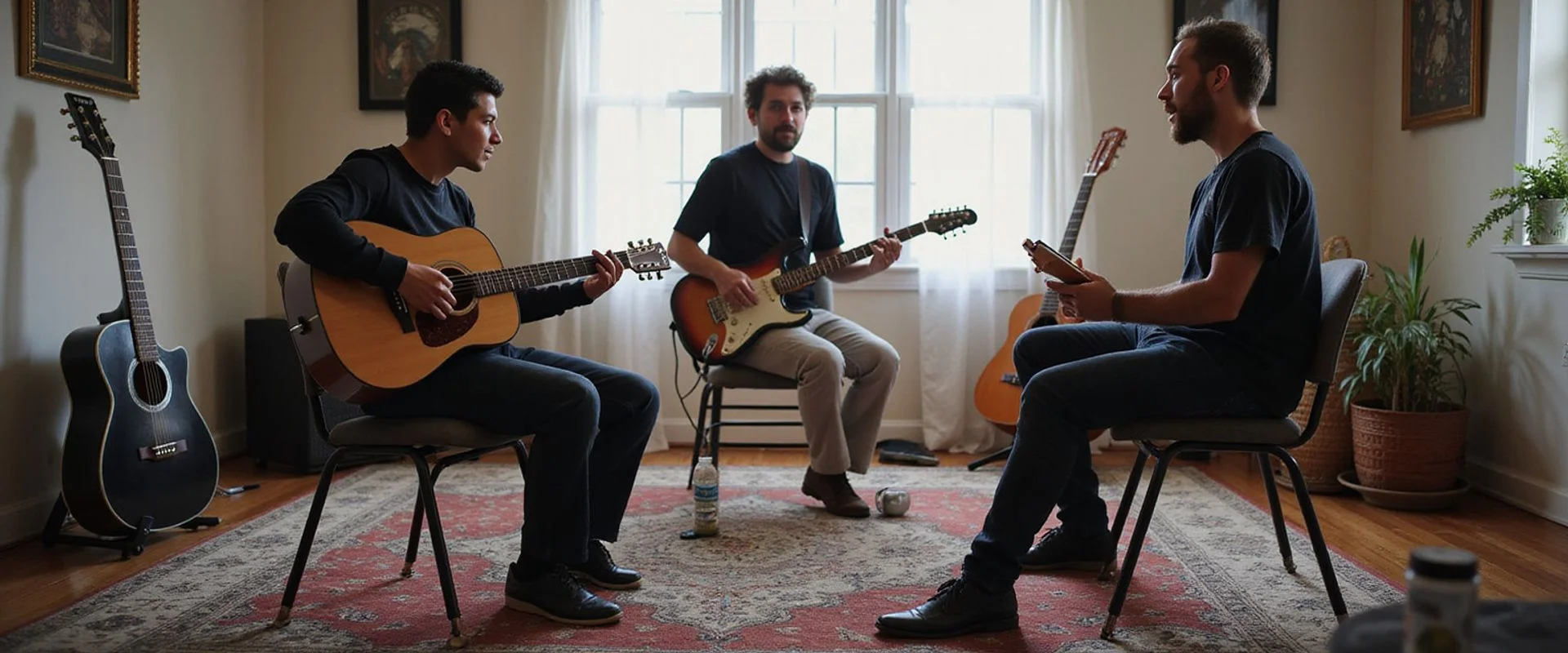
Every subscription includes Jam Sessions, Songwriting Circles, and The Sessions open mic at no extra cost. Students from South Austin, East Riverside, Round Rock, and neighborhoods across the city join the all-levels jams, and beginners are genuinely welcome - following a chord chart in a room is a skill you learn by trying it, not by waiting until you feel ready.
Start with a free 15-minute consult at Austin Guitar Lessons. Bring the songs you want to play and whatever guitar you already own, and Sameer will give you an honest read on where to begin. If you’re an adult restarting rather than starting, adult guitar lessons covers that angle directly.
Transparent pricing
How Much Do Beginner Guitar Lessons Cost in Austin?
Month-to-month with community programming included from day one (2026 rates).
What every subscription includes
- check_circle Free access to The Sessions, Songwriting Circles, and Jam Sessions
- check_circle Theory and playing covered in every lesson
- check_circle Detailed written recap after every lesson
- check_circle Video recap of every session (remote students)
- check_circle One-on-one jam time with drum tracks and real amps (in person)
Prices are current published subscription rates. Confirm details at your free consult.
Why choose us
Why Choose Beginner Lessons Here
You know what week you're in
The early curriculum is mapped rather than improvised. You always know what comes next, what you're working toward, and roughly when it should click.
Songs, not endless exercises
Technique gets built inside music you recognise. Most students play a full song within the first month, which is what keeps anyone practising past week three.
Honest gear guidance
A beginner guitar, a clip-on tuner, and a capo cover it. You'll get help on acoustic versus electric and on guitar setup and action before spending anything.
Finger pain gets addressed
Sore fingertips and calluses are the most common quiet reason beginners stop. Setup, string gauge, and technique fixes reduce it a lot, and it's a normal thing to raise in a lesson.
Theory only when it helps
No abstract worksheets. Applied theory arrives at the moment it explains something you're already playing, which is when it actually sticks.
A community from day one
Jam Sessions are all-levels and beginners are genuinely welcome. Watching better players up close accelerates things faster than another solo hour.
The process
How Beginner Lessons Works
- 1 call
Free consult
Fifteen minutes on goals, gear you already own, and which songs made you want to start.
- 2 counter_1
Weeks 1–2
Holding the instrument, tuning a guitar, first open chords, and a clean single strum in time.
- 3 counter_3
Weeks 3–6
Chord transitions, strumming patterns, reading chord charts, and your first full song end to end.
- 4 counter_8
Weeks 7–8
A second and third song, the start of barre chords, and a practice routine that fits your week.
See it in action
Inside the Studio
Testimonials
What Students Say About Beginner Lessons
5.0 across 70+ Google reviews.
"Went from a complete beginner to doing my own shows around Austin. The lessons and The Sessions community changed everything for me."
"I'd tried learning online multiple times and always quit. Having a real teacher who tailors lessons to my taste in music made all the difference."
"Sameer was honest about where to start and never oversold anything. That trust is why we stayed."
Questions
Beginner Lessons FAQs
How long until I can play a full song? expand_more
Should I start on acoustic or electric? expand_more
What gear do I actually need? expand_more
How long do sore fingers last? expand_more
How much should I practice between guitar lessons? expand_more
I tried an app and quit. Why would this be different? expand_more
How much do beginner guitar lessons cost in Austin? expand_more
Is 30 too late to learn guitar? expand_more
What is the 80/20 rule in guitar? expand_more
Still have questions?
Bring them to the free 15-minute consult. No obligation, nothing sold on the call.
Book Free 15-Min ConsultGo deeper
Guides on Beginner Lessons
Acoustic vs Electric: What Should a Beginner Start On?
Compare the two by goal, repertoire, difficulty, and cost, and settle the myth that one is the correct beginner instrument.
Chord Changes Are Too Slow: How to Speed Them Up
Why transitions lag, the drills that actually fix them, and the common mistakes that keep beginners stuck at this exact point.
What Your First 8 Weeks of Guitar Lessons Cover
The week-by-week early curriculum: chords, strumming, your first song, and where applied theory fits in.
What Guitar Gear You Actually Need to Start (and What You Don't)
The short list a beginner genuinely needs, what to skip for now, realistic starter costs, and where to buy in Austin.
How Long Before You Can Play a Whole Song
A realistic timeline to your first complete song, what speeds it up, and which songs make the best early wins.
What 'Practicing Right' Actually Means for Beginners
Deliberate practice versus mindless repetition, in concrete terms, what a good twenty minutes looks like and how to tell the difference.
Free tool
Try Our Practice Time Planner
See how many hours you'll practice before your first full song, based on your weekly practice minutes.
Use the CalculatorRelated Lessons & Programs
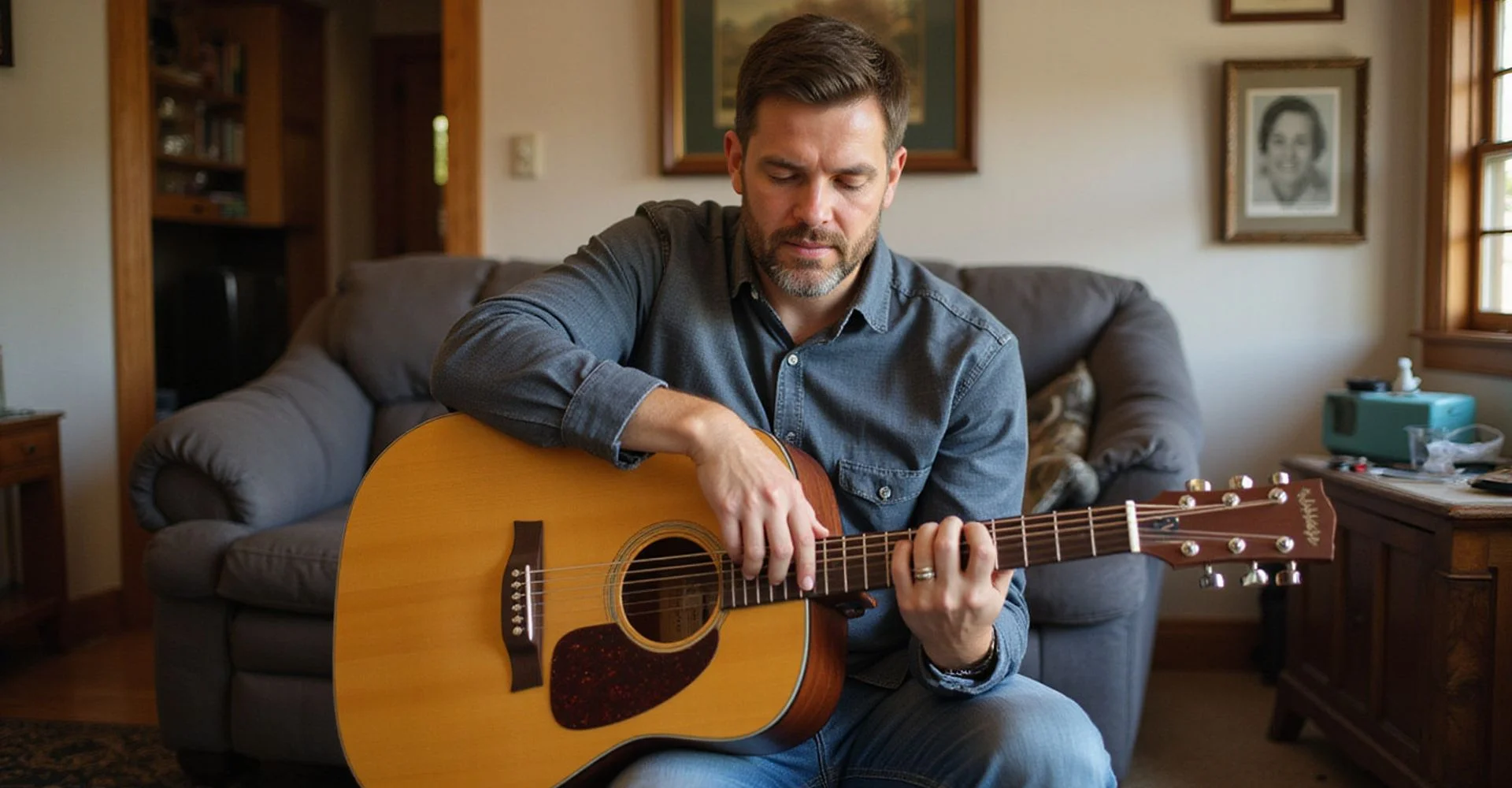
Adult Guitar Lessons
Private guitar lessons built for adults, objection-first, no wasted-years trap, a schedule that fits a working life.
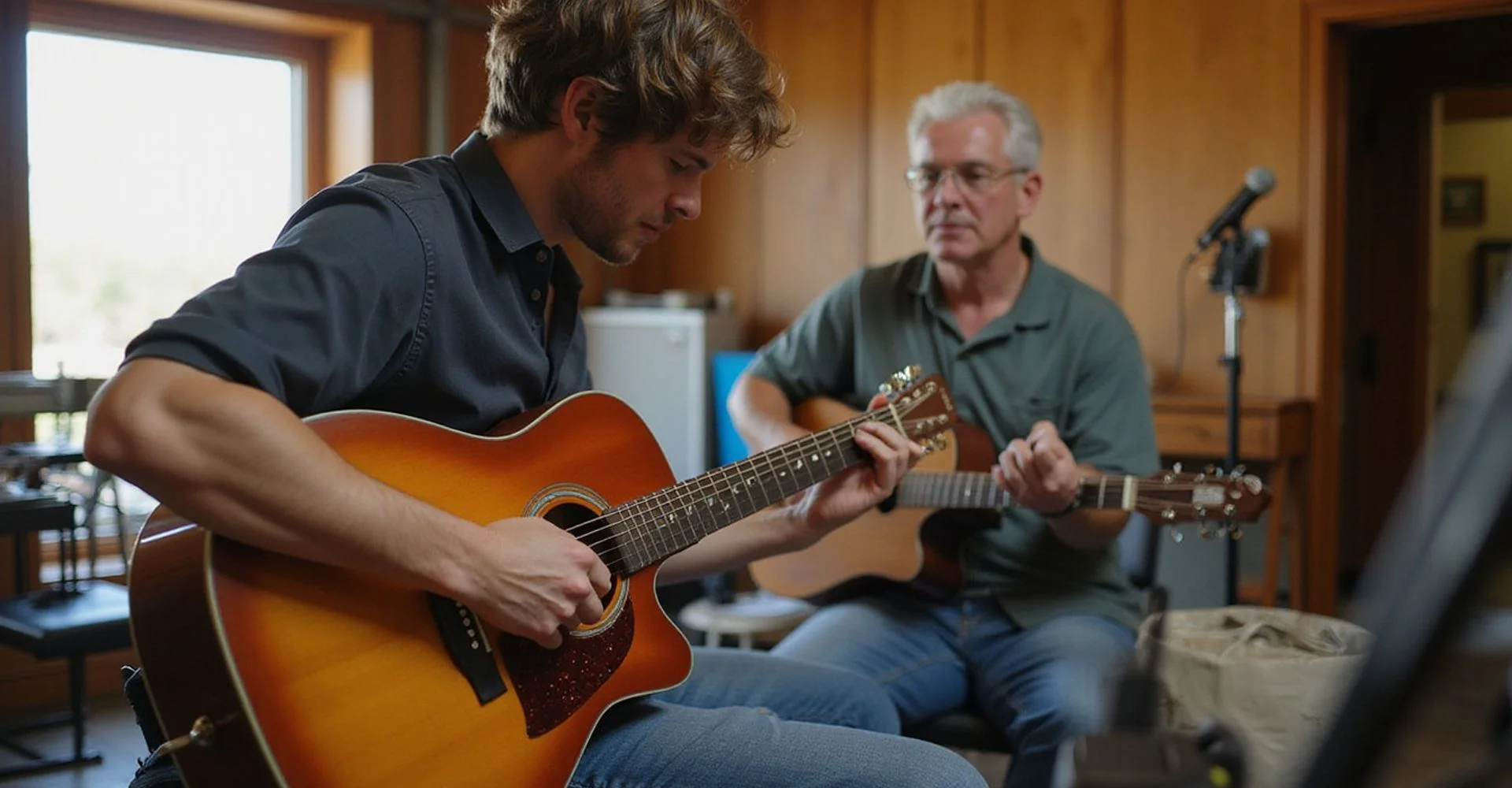
Acoustic Guitar Lessons
Acoustic guitar lessons in Austin built around your repertoire - from campfire songs to coffeehouse fingerstyle, taught by a gigging musician.
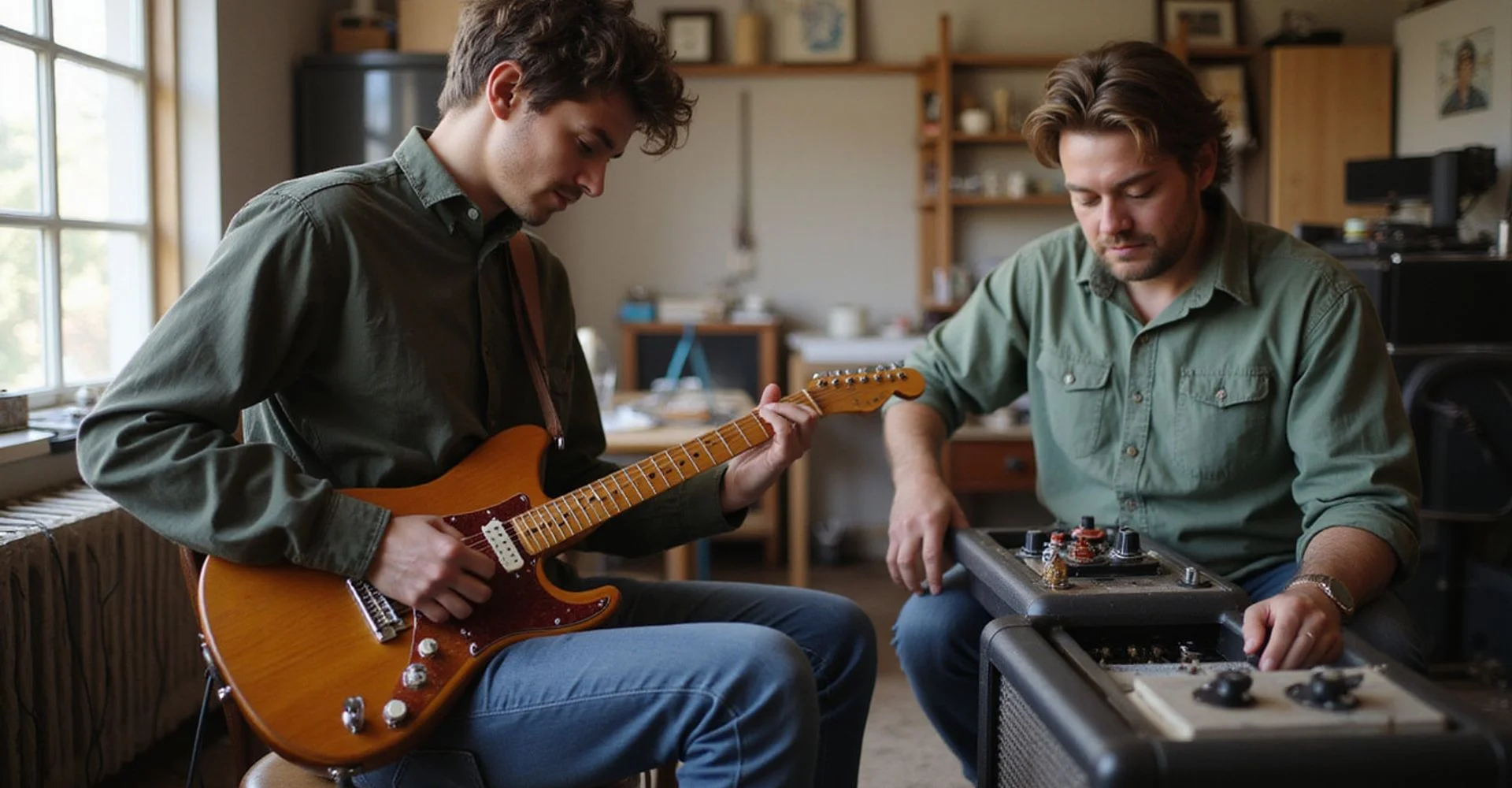
Electric Guitar Lessons
Electric-focused lessons built around tone and riffs, dialing in a rig, lead versus rhythm, and getting off the pentatonic box.
Ready to Start Beginner Lessons?
Book a free 15-minute consult and get an honest answer on whether beginner guitar lessons fit what you're after.
- check_circle Month-to-month, no contract
- check_circle Community programming included
- check_circle In person or online