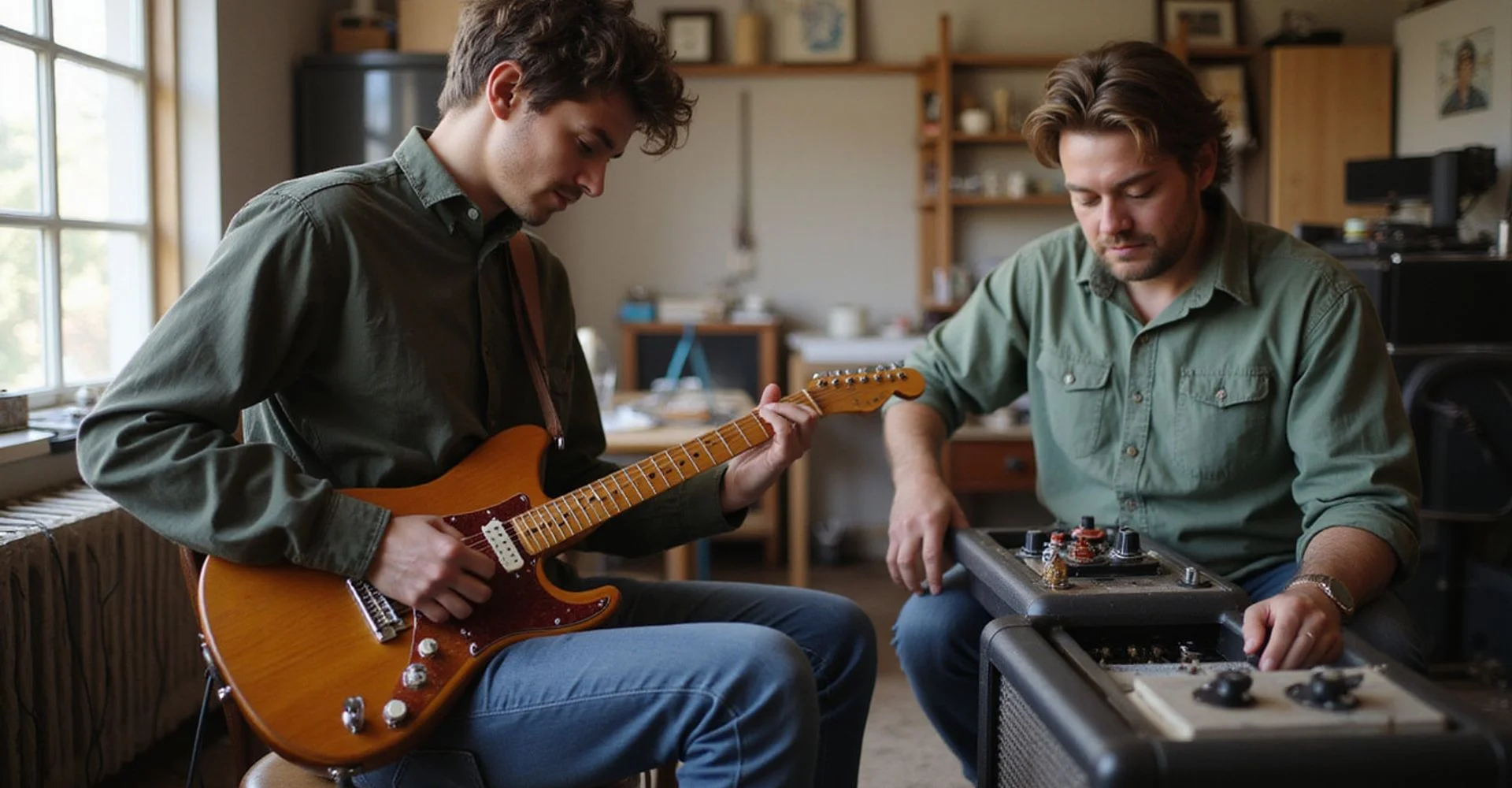
Electric Guitar Lessons in Austin: Your First Tone and Riff
Electric-focused lessons built around tone and riffs, dialing in a rig, lead versus rhythm, and getting off the pentatonic box.
- star 5.0 · 70+ Google reviews
- verified Taught by a gigging musician
- event_repeat Month-to-month, no contract
Chasing a Tone and a Riff
Electric players almost always arrive at the East Riverside studio with a specific sound in their head - a riff they want to nail, a solo they’ve air-guitared for a decade, a tone they’ve never been able to get out of their amp. That’s a good starting point. Sameer Saleem uses it to build a private lesson plan that looks very different from the acoustic path, shaped by 10 years of teaching and 100+ Austin shows a year.
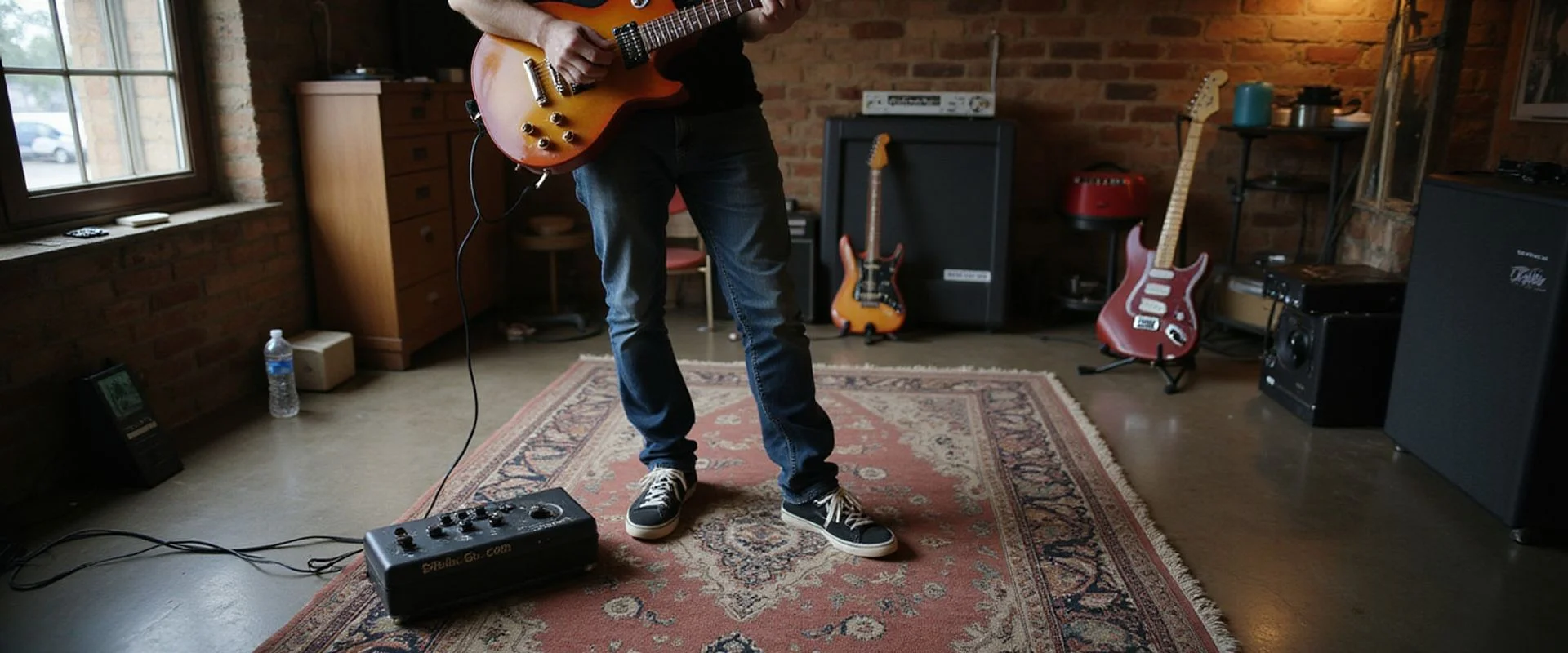
Early lessons cover getting a first rig usable: amp settings that don’t bury you in gain, what overdrive and distortion actually do differently, and how much of the sound you’re chasing lives in the pick attack rather than the pedal. Most students spend less on effects pedals after a few lessons, not more.
Rhythm First, Even for Lead Players
The unglamorous truth is that rhythm guitar is roughly eighty percent of the job. That’s the 80/20 rule in guitar: power chords, palm muting, blues shuffles, and a tight right hand carry you through rock, blues, and nearly every real playing situation. Lead lines played over sloppy timing never sound the way they do on the record.
So rhythm gets equal weight from the start. Once it’s solid, alternate picking, hammer-ons and pull-offs, string bending, and vibrato get built on top of something stable. Vibrato in particular is where most self-taught players give themselves away, and it’s very fixable with someone listening.
Getting Off the Pentatonic Box
This is the wall. You learned the minor pentatonic in position five, it worked, and eight years later you’re still there. The fix isn’t a new scale, it’s seeing the fretboard by intervals and chord tones instead of by shapes.
That means triads across the neck, blues scale extensions, and knowing which notes belong to the chord happening right now. Fretboard navigation like that turns soloing over changes from luck into a choice. It’s the same applied theory approach Sameer Saleem uses in the music theory lessons, aimed specifically at electric lead playing.
Gear, Honestly
Stratocaster or Les Paul, tube or modelling, single coils or humbuckers. These matter far less than people hope. Neck shape and instrument weight affect how much you practise, which affects your playing more than any pickup ever will.
Bring what you already own to a lesson. Between the studio’s amps and your rig, we’ll get a usable tone dialled in and you’ll know which of your gear frustrations are real and which are settings.
Where to Play Electric Guitar in Austin
Jam Sessions come free with every subscription, and they’re the natural home for electric playing: trading riffs, comping behind someone else’s solo, and soloing over changes in real time with people listening. Students from South Austin, Downtown, and across the metro join regularly. That pressure teaches things a bedroom cannot.
Start with the free 15-minute consult. Bring the three players you want to sound like and whatever gear you own, and you’ll get an honest read on the gap and how long it takes to close. New to guitar entirely? Start at beginner guitar lessons.
Transparent pricing
How Much Do Electric Guitar Lessons Cost in Austin?
Month-to-month with community programming included (2026 rates).
What every subscription includes
- check_circle Free access to The Sessions, Songwriting Circles, and Jam Sessions
- check_circle Theory and playing covered in every lesson
- check_circle Detailed written recap after every lesson
- check_circle Video recap of every session (remote students)
- check_circle One-on-one jam time with drum tracks and real amps (in person)
Prices are current published subscription rates. Confirm details at your free consult.
Why choose us
Why Choose Electric Lessons Here
Out of the pentatonic box
The most common intermediate wall. Triads, blues scale extensions, and fretboard navigation open the neck up so soloing over changes stops being guesswork.
Tone taught honestly
Amp settings, overdrive and distortion, effects pedals, and which parts of a sound come from your hands. You'll spend less on gear, not more.
Rhythm gets equal time
Palm muting, power chords, and a tight right hand carry most of what you'll ever play live. Lead guitar built on loose rhythm never sounds right.
Technique with a purpose
String bending, vibrato, hammer-ons and pull-offs, and alternate picking get drilled in service of a real part, not as isolated exercises.
Taught by a gigging player
Over 100 Austin shows a year. When you ask what actually happens on a stage with a Strat or a Les Paul in your hands. The answer isn't secondhand.
Jams to test it in
Jam Sessions are included with every subscription, and playing lead over other people's changes is where the theory finally becomes instinct.
The process
How Electric Lessons Works
- 1 call
Free consult
The players and tones you're chasing, plus whatever gear you already own.
- 2 settings_input_component
Tone and rig
Amp settings, overdrive and distortion, and how much of 'that sound' is actually in your hands.
- 3 graphic_eq
Rhythm before lead
Power chords, palm muting, and a rhythm part that holds up, because it's what you'll play most.
- 4 insights
Lead and the fretboard
Bending, vibrato, alternate picking, and mapping triads so soloing isn't confined to one box.
See it in action
Inside the Studio
Testimonials
What Students Say About Electric Lessons
5.0 across 70+ Google reviews.
"Sameer brought me to a new level with the fretboard. I'm finally breaking out of the pentatonic boxes I'd been stuck in for years."
"The Sessions gave me a welcoming community and pushed my playing further than practising alone ever could."
"Went from a complete beginner to doing my own shows around Austin. The lessons and the community changed everything for me."
Questions
Electric Lessons FAQs
I'm stuck in the pentatonic box. What fixes that? expand_more
What amp and pedals should I buy? expand_more
Do I need to learn rhythm if I want to play lead? expand_more
Stratocaster or Les Paul? expand_more
Can beginners start on electric? expand_more
How long before I can solo over a song? expand_more
Are 30-minute guitar lessons worth it? expand_more
Are electric guitar lessons available online? expand_more
How much do electric guitar lessons in Austin cost? expand_more
Still have questions?
Bring them to the free 15-minute consult. No obligation, nothing sold on the call.
Book Free 15-Min ConsultGo deeper
Guides on Electric Lessons
Stuck on the Fretboard: Breaking Out of the Pentatonic Box
Why one scale shape traps so many self-taught players, how to connect positions, and what to practise so solos stop sounding stuck.
Getting Your First Electric Guitar Tone and Rig Dialed In
Amp basics, starter settings that actually work, what gear matters early, and the tone mistakes that cost beginners the most money.
Related Lessons & Programs
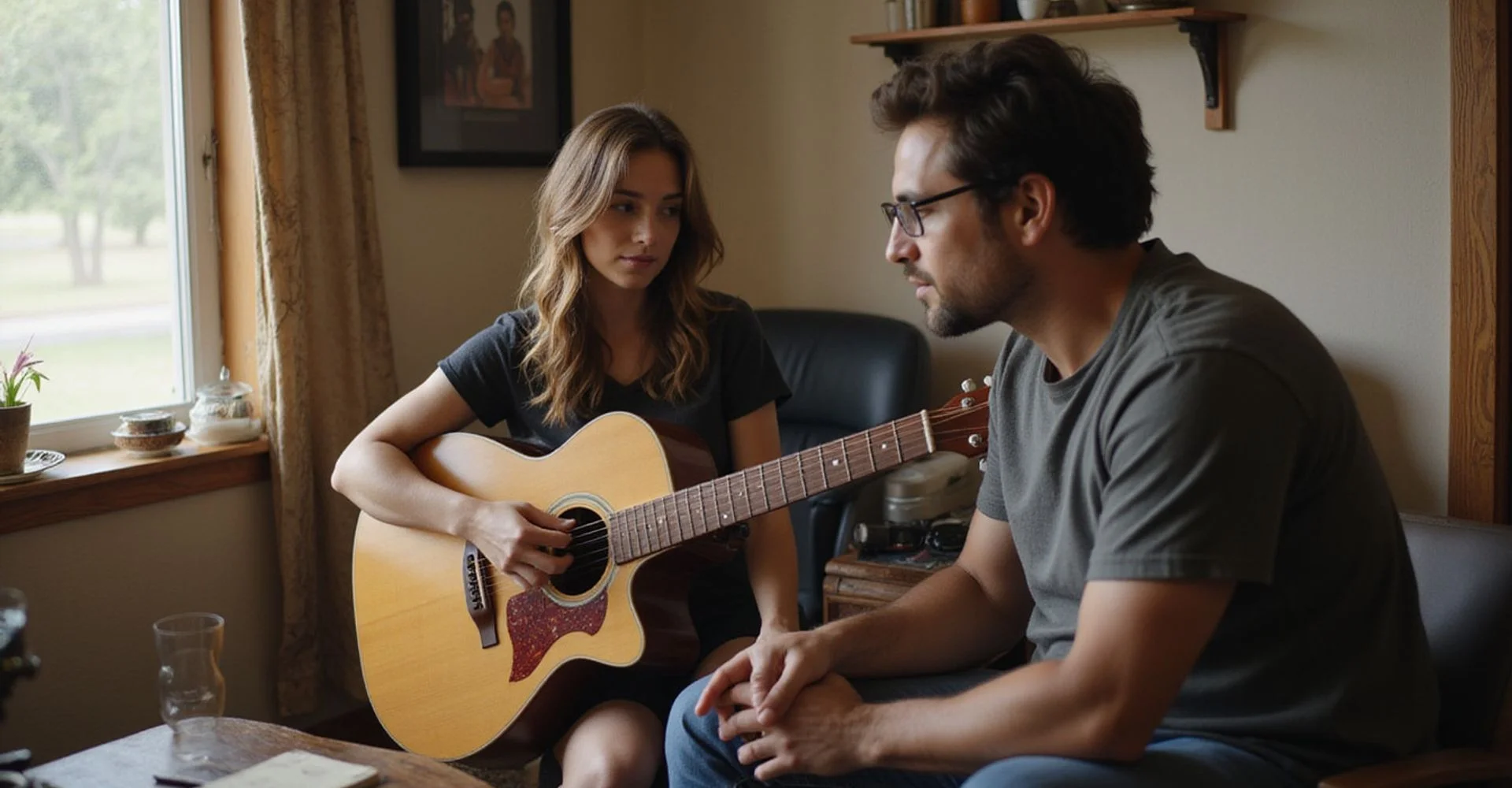
Beginner Guitar Lessons
Private beginner guitar lessons in Austin - what the first eight weeks cover, what gear you need, and how quickly you play a real song.
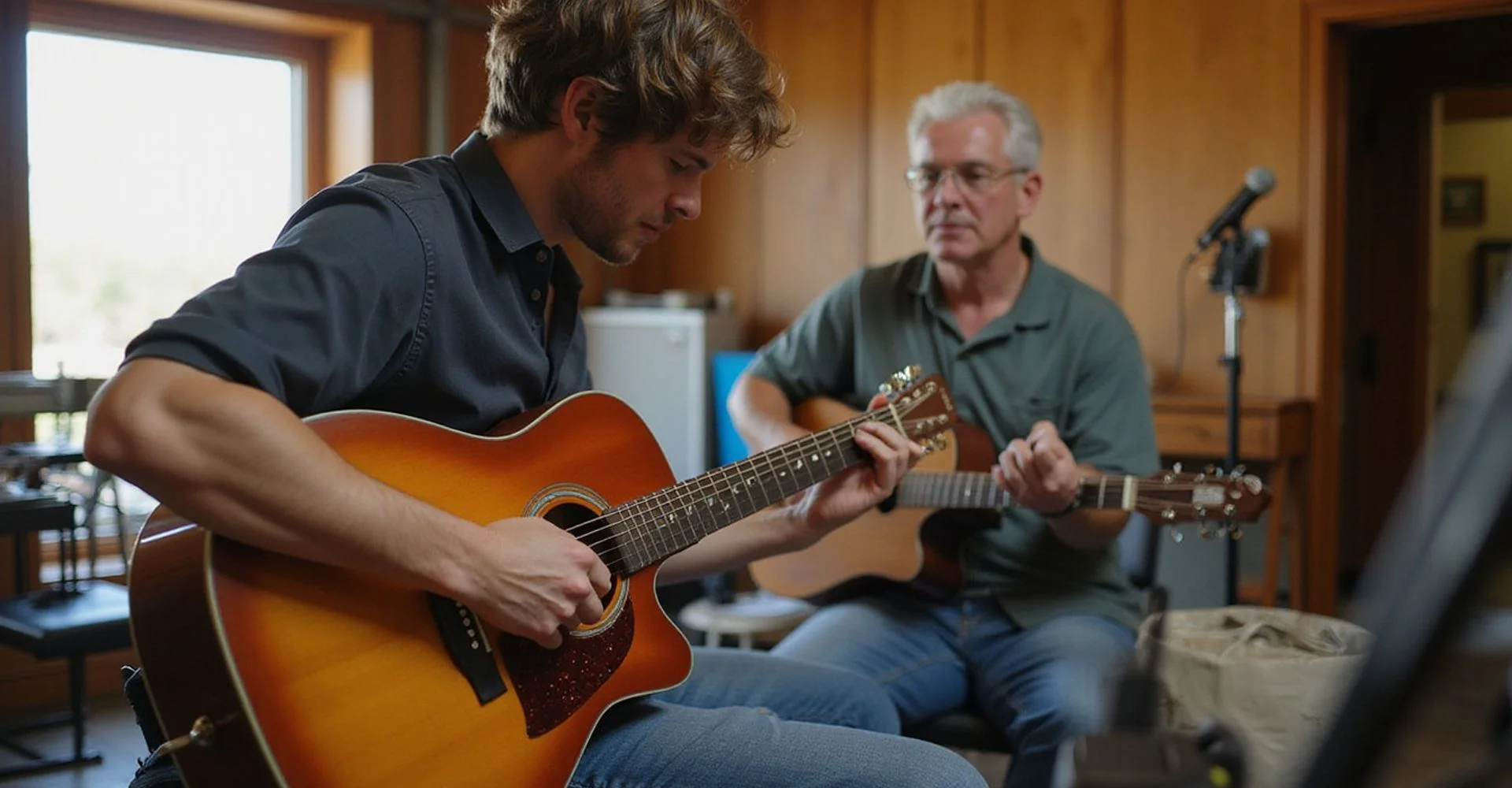
Acoustic Guitar Lessons
Acoustic guitar lessons in Austin built around your repertoire - from campfire songs to coffeehouse fingerstyle, taught by a gigging musician.
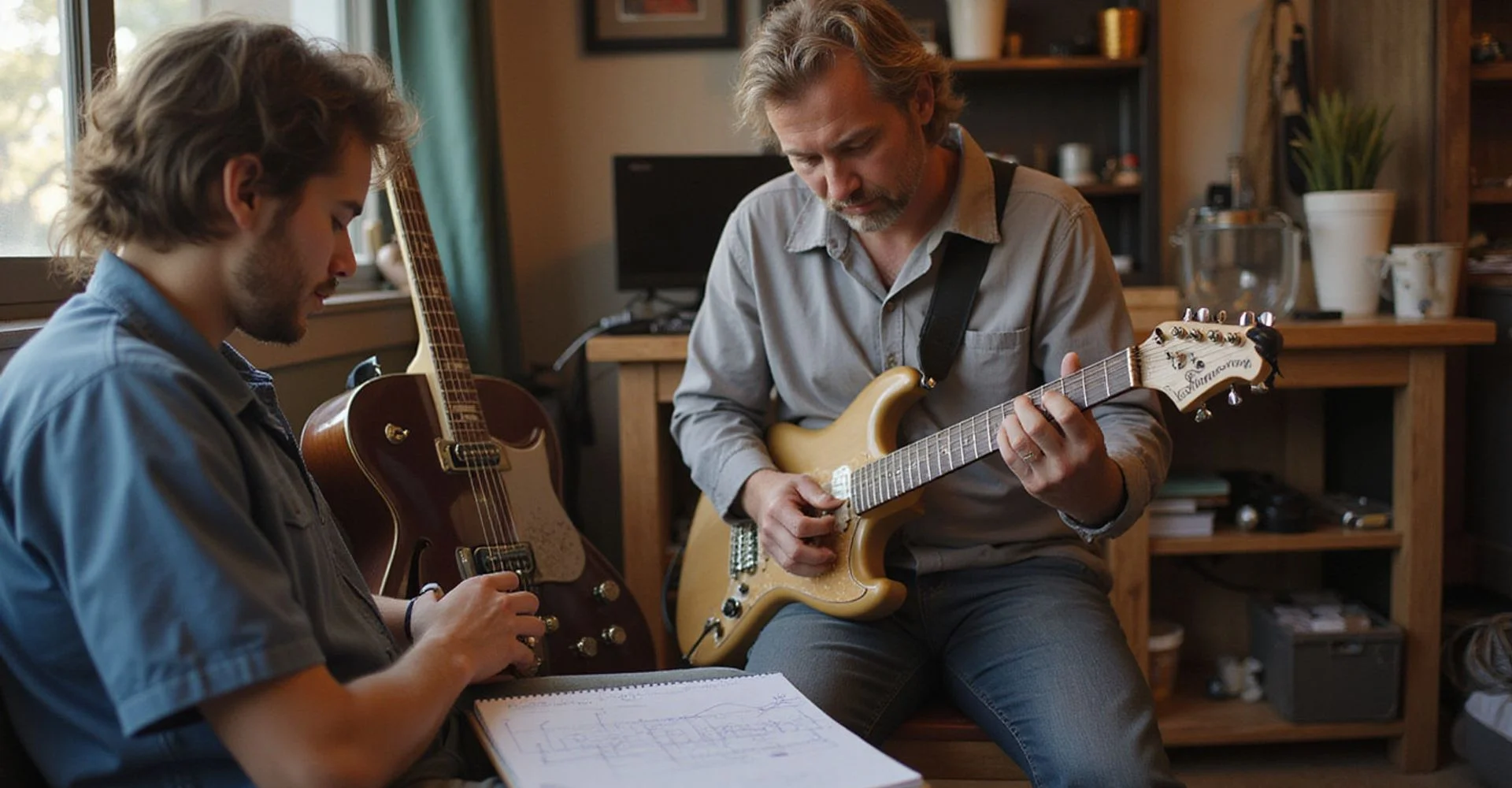
Music Theory Lessons
For intermediate players who feel stuck, applied theory taught in-lesson, used on the song in front of you the same day.
Ready to Start Electric Lessons?
Book a free 15-minute consult and get an honest answer on whether electric guitar lessons fit what you're after.
- check_circle Month-to-month, no contract
- check_circle Community programming included
- check_circle In person or online