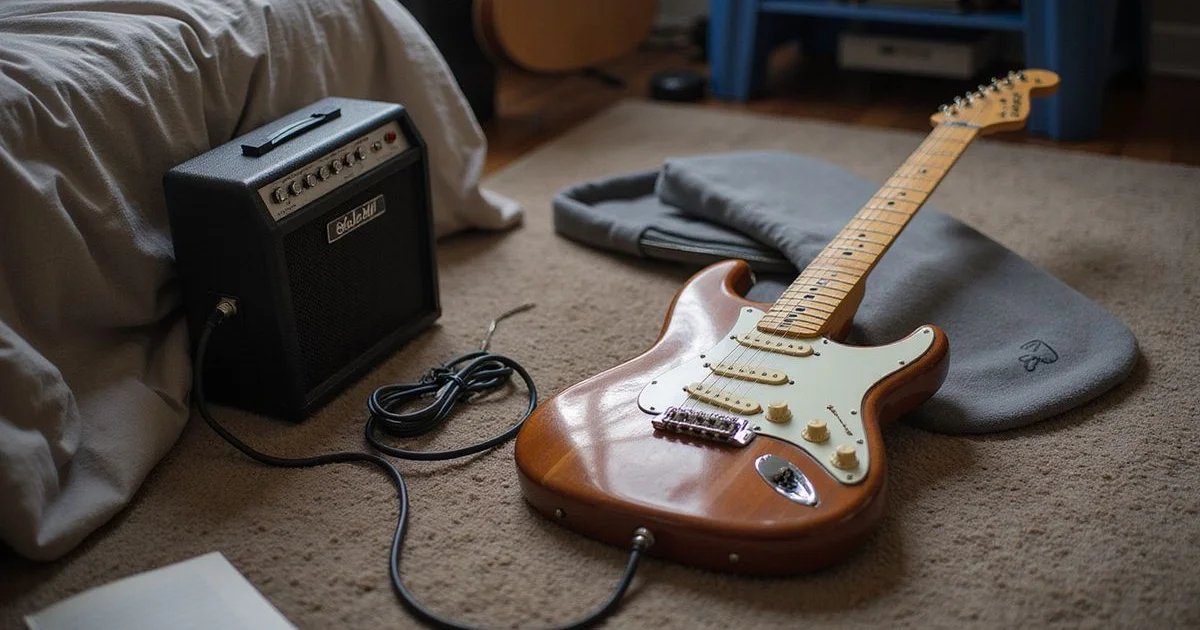
Start Clean, Not Loud
The first move nearly every new electric player makes is turning the gain up. It feels exciting and it hides everything, which is why electric guitar lessons start somewhere else.
High gain compresses your dynamics, masks sloppy fretting, and lets muted strings ring out unnoticed. Practising on a clean or lightly driven tone is unforgiving in a way that’s actively useful. You hear every buzz and every note that didn’t fully land.
Save the heavy tone for playing. Practise clean.
A Starting Point That Works
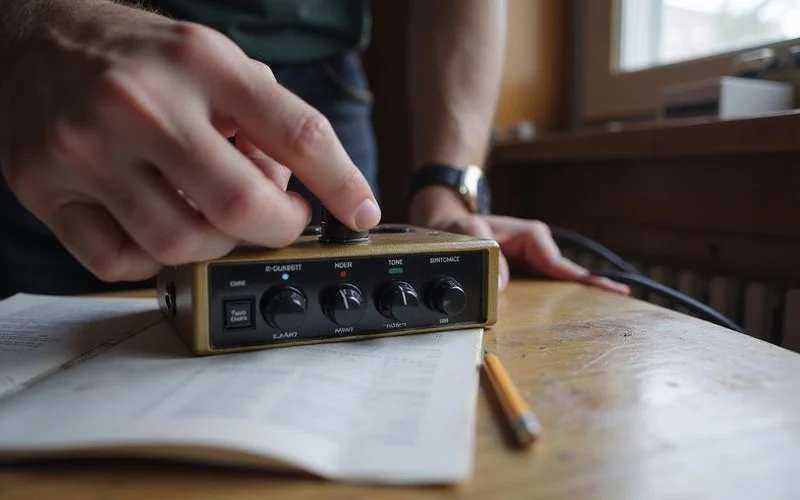
Set everything to noon, then adjust one knob at a time and listen.
| Control | Starting point | What it does |
|---|---|---|
| Gain / drive | Low (9 o’clock) | Adds grit and compression |
| Bass | Noon | Too much turns to mud |
| Mids | Just above noon | Where the guitar lives in a mix |
| Treble | Noon | Bite and clarity; too much is harsh |
| Master volume | As low as the room allows | Louder always sounds better; that’s a trap |
The most common beginner setting is a “scooped” tone with bass and treble up and mids down. It sounds enormous playing alone and vanishes completely the second anyone else plays. Push the mids up instead.
Test everything at a real volume
A tone dialled in at whisper level often falls apart at band volume, and vice versa. Set it where you’ll actually use it.
What You Need, and Don’t
Need: a playable guitar, a small practice amp, a decent cable.
Don’t need yet: a pedalboard, a second amp, boutique anything. One overdrive pedal is a reasonable addition after a few months, and even that isn’t urgent.
Full starter budgets are in starter gear. The short version is that a modest amp and a properly set-up guitar beat an expensive rig you can’t yet drive.
The Mistakes That Cost the Most
Buying tone instead of building it. A large portion of any famous sound is in the hands, pick attack, vibrato, note choice. New gear can’t supply those, which is why the same rig sounds ordinary in one player’s hands and unmistakable in another’s. If every solo still sounds the same through a new amp, the problem is the pentatonic box rather than the gear.
Chasing a produced record. The tone you’re comparing yourself to was recorded, layered, mixed, and mastered. Live, that same guitarist often sounds much closer to you than you’d expect.
Ignoring the guitar’s own controls. Rolling the volume knob back cleans up an overdriven amp, and the tone knob makes a bigger difference than most beginners ever discover. Both are free.
Practising too loud. Excess volume masks mistakes and annoys everyone you live with. Neither helps.
The Guitar’s Own Controls
The two most underused tone controls on any rig are already on your instrument.
The volume knob. Rolling it back cleans up an overdriven amp without touching a pedal. That’s how a large amount of classic tone was actually produced, one dirty amp setting, cleaned up from the guitar.
The tone knob. Rolling it down warms a bright single-coil considerably. Most beginners leave both on ten permanently and never find out what they do.
The pickup selector. Neck for warmth, bridge for cut. Bigger difference than most pedals make.
Spend ten minutes with just those three before buying anything.
Practising Quietly
An electric unplugged is quiet enough for a late-night session in a shared house, and with headphones through a small amp it’s silent to everyone else. For apartment living, that’s often the deciding advantage over an acoustic.
It also removes a real barrier to consistency. Practice that requires waiting for the house to be empty happens far less often than practice you can do at 11pm without a conversation, and consistency is what actually determines progress.
Bring Your Rig to a Lesson
The fastest way to sort tone is to plug in with someone who’s dialled in a few hundred amps. Ten minutes usually settles whether your frustration is a settings problem, a technique problem, or a genuine gear limit, and it’s usually one of the first two.
That’s part of the standard first-month work in electric guitar lessons, alongside the rhythm foundation that makes any tone sound better.