Three Skills, One Path
A singer-songwriter needs three things working together: a guitar part that supports a voice, a voice that holds up over it, and material worth playing. Taught separately they stay separate, which is why voice and vocal lessons here cover all three at once. The coordination between them is the actual job.
Here they’re taught in the same lesson. Rhythm guitar built to sit under a vocal. Breath, pitch, and placement worked on inside the song you’re playing. Song structure discussed on your own material rather than in the abstract.
What a Lesson Covers
The guitar part. Strumming that leaves room for a vocal rather than competing with it. Dynamics, and knowing when to play less. Capo positions to move a song into your key rather than straining for the original.
The voice. Diaphragmatic breathing and support so long phrases hold. Placement so the sound isn’t stuck in your throat. Phrasing, which is what makes a cover sound like your version rather than an imitation.
The coordination. Getting hand and voice independent, which is the specific thing that stalls most aspiring performers. Covered in detail in sing and play at once.
The material. Song structure, hooks, and finishing what you start.
The most common breakthrough
Transposing a song into a key that actually suits your voice. Students routinely arrive convinced they can’t sing something when the real problem is that they’ve been singing it in someone else’s key.
The Path to a First Open Mic
| Stage | What you’re working on | Where |
|---|---|---|
| 1 | One song coordinated, guitar and voice together | Lessons |
| 2 | Two or three songs solid enough to survive nerves | Lessons + home |
| 3 | Playing your material for other people | Songwriting Circles |
| 4 | A first song in front of a room | The Sessions |
| 5 | Original material and a short set | Both |
No stage is compulsory and the timeline is yours. Some students stop at stage two and are happy there.
Where Most People Get Stuck
Four sticking points come up repeatedly, and each has a specific fix.
The guitar falls apart when the vocal starts. An attention problem. The strum isn’t automatic yet. Simplify, lock the vocal, rebuild.
The song sits in the wrong key. Straining at the top of your range eats the attention your hands need. A capo usually solves it in one lesson.
Original material never gets finished. Almost always a structure problem rather than a lack of ideas.
Performing is the goal but never happens. Usually because there’s no low-stakes room to start in.
A Realistic Timeline
Six to twelve months from starting to playing your own short set is typical for someone arriving with basic guitar already in place, assuming steady practice and using the community programming.
Faster if you already play well and only need the voice, or the coordination, or the writing. Slower if all three are new, which is completely normal and worth knowing in advance so month three doesn’t feel like failure.
The pace is yours either way. Plenty of students work on this for years without ever performing, and enjoy it just as much.
The Community Is the Accelerator
This is where a solo instructor with community programming beats a school without one.
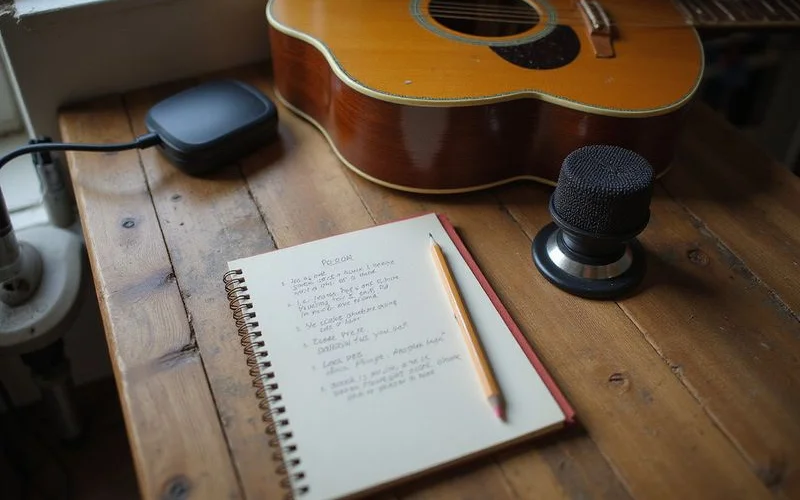
The Songwriting Circles are a working session where writers bring finished, half-written, or barely-started material and develop it together. It’s the fastest route from a notebook fragment to a finished song, and observing before you share is completely normal.
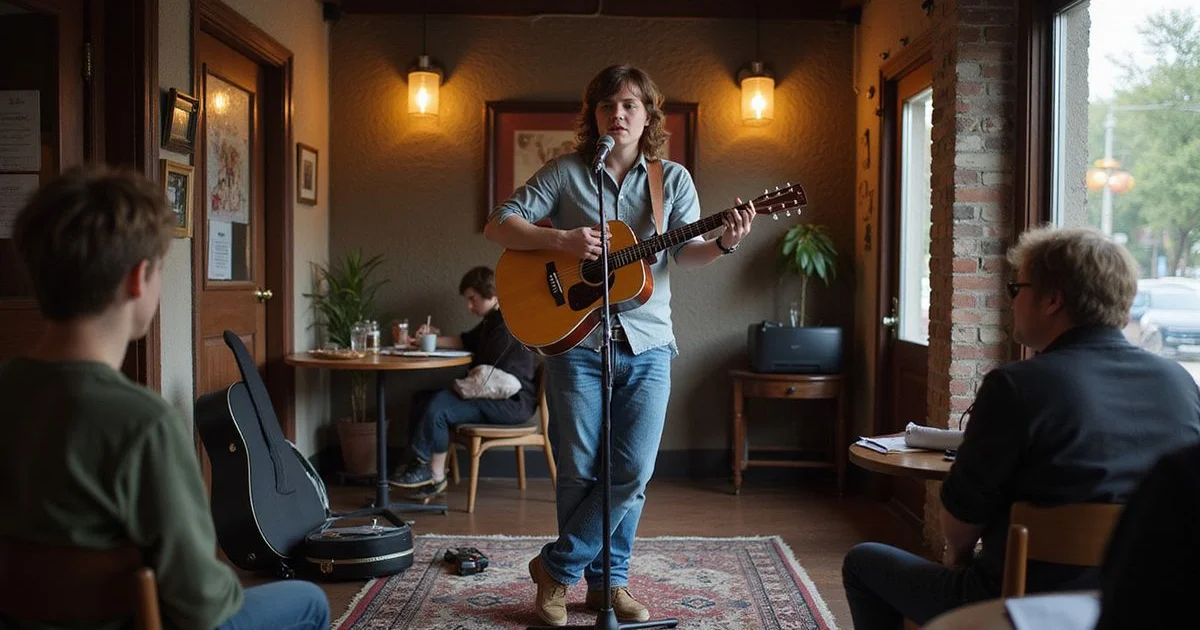
The Sessions is the monthly members-only open mic, typically 20 to 30 people, all students. It’s a genuinely low-stakes first stage. Everyone in the room has been exactly where you’re standing, and it’s included free with every subscription.
Practical stage detail comes from the same source: microphone technique, monitor mix, what to do when you can’t hear yourself. That’s first-hand knowledge from 100+ shows a year, and it’s part of what voice and vocal lessons are built around.