What Counts as Material
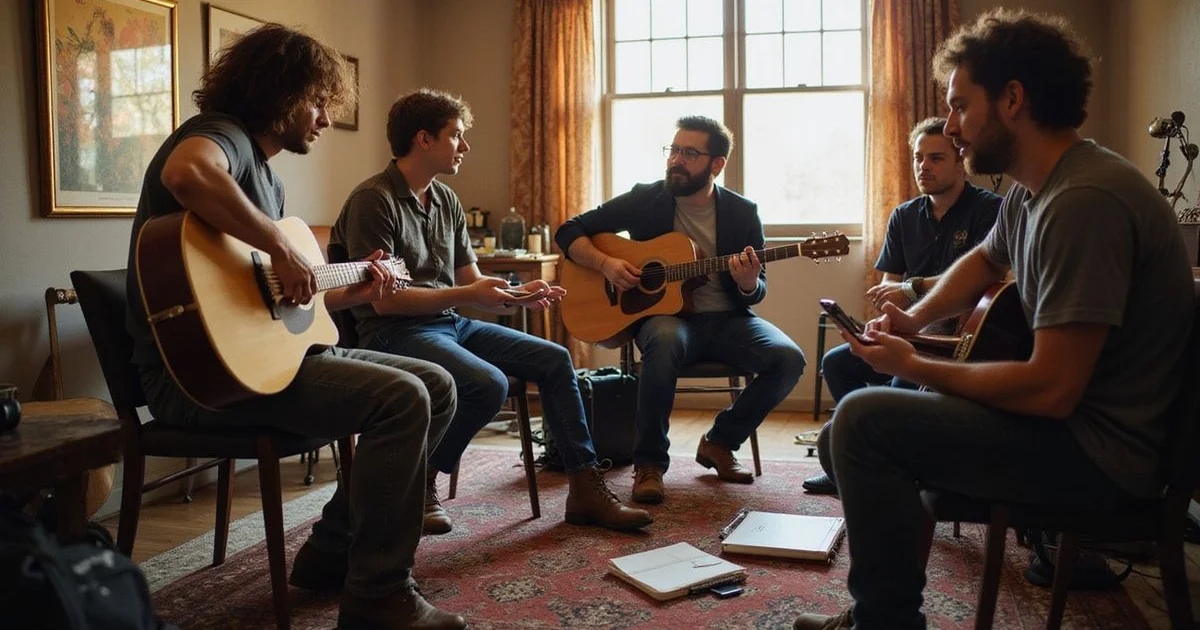
Almost anything. It’s the question that keeps first-timers away from the Songwriting Circles, and the answer is broader than people assume.
A finished song. Fine, though it’s often the least useful thing to bring, there’s less room to change it.
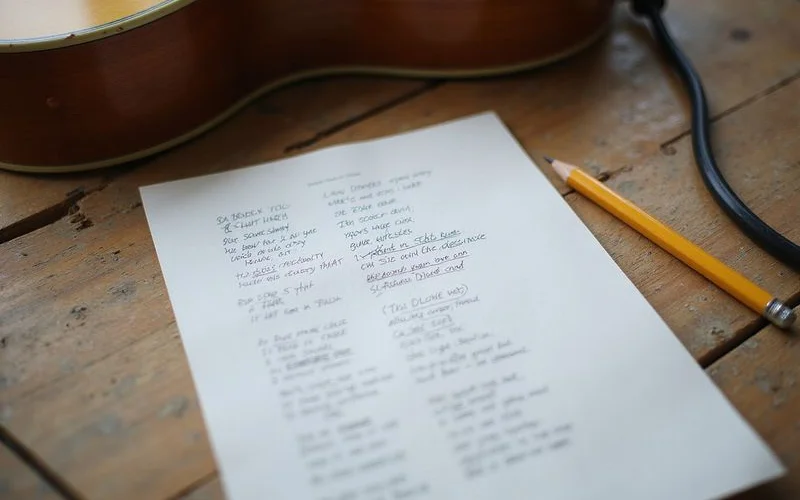
A half-written song. The sweet spot. A verse and a chorus and no idea what happens next.
A chord progression. No words, no melody, just something that sounds good.
A single riff. Eight bars you keep coming back to.
A lyric or a title. No music at all. Plenty of songs start here.
Nothing. Come and watch. This is a completely valid way to attend.
How the Group Works On It
You play it. Rough is expected. Nobody in the room is auditioning.
Then you say what you want help with. That part matters, because “what do you think?” gets you scattered opinions while “the second verse repeats the first and I can’t fix it” gets you a solution. The more specific the ask, the more useful the room.
From there people offer ideas. A different chord under the chorus. A line that’s doing nothing. A structure change. You take what’s useful and ignore the rest, it’s your song, and everyone in the room knows it.
The best question to bring
“Where does it lose you?” People are far better at identifying the moment their attention drifted than at explaining why, and that moment is almost always where the problem is.
Giving Feedback Well
You’ll be on the other side too, and it’s a learnable skill.
Describe, don’t prescribe. “I lost the thread in the second verse” is more useful than “you should cut the second verse.”
Say what’s working. Writers need to know which parts to protect at least as much as which parts to fix.
Serve their song. The goal is their version, better, not the version you’d have written.
Answer what was asked. If someone asks about the bridge, resist redesigning the whole arrangement.
What a Session Usually Looks Like
There’s no fixed running order. People arrive, settle, and someone starts. Over a couple of hours, most people who wanted to share something have, and the conversation between songs is often where the useful part happens, someone mentioning the trick they used to fix a similar problem last month.
Groups are small enough that everyone gets real attention rather than a queue-and-move-on format. That’s deliberate. A room of thirty can’t work on a song properly; a room of six or eight can.
You don’t need to prepare anything beyond having your idea to hand. Playing from a phone recording is completely normal, and so is stopping halfway through because that’s where it runs out.
Taking the Feedback Home
The most useful habit after a circle is writing down what was said before you leave. Not the compliments, the specific suggestions, including the ones you disagreed with. A note that says “everyone lost interest at the second verse” is worth more a week later than a general sense that it went fine.
Then revise, and bring it back. Watching a song improve across two or three sessions is what the format is actually for, and it’s a considerably faster loop than working alone and waiting for inspiration to solve it.
Observing First Is Normal
Several regulars attended for a while before bringing anything. Watching other writers diagnose problems trains your ear for your own material, and nobody keeps a tally of who’s shared.
The circles are free with every subscription, alongside the jams and The Sessions. Structure questions that come up constantly are covered in song structure basics, and the full picture of how the sessions run is on the Songwriting Circles page.