What Actually Happens
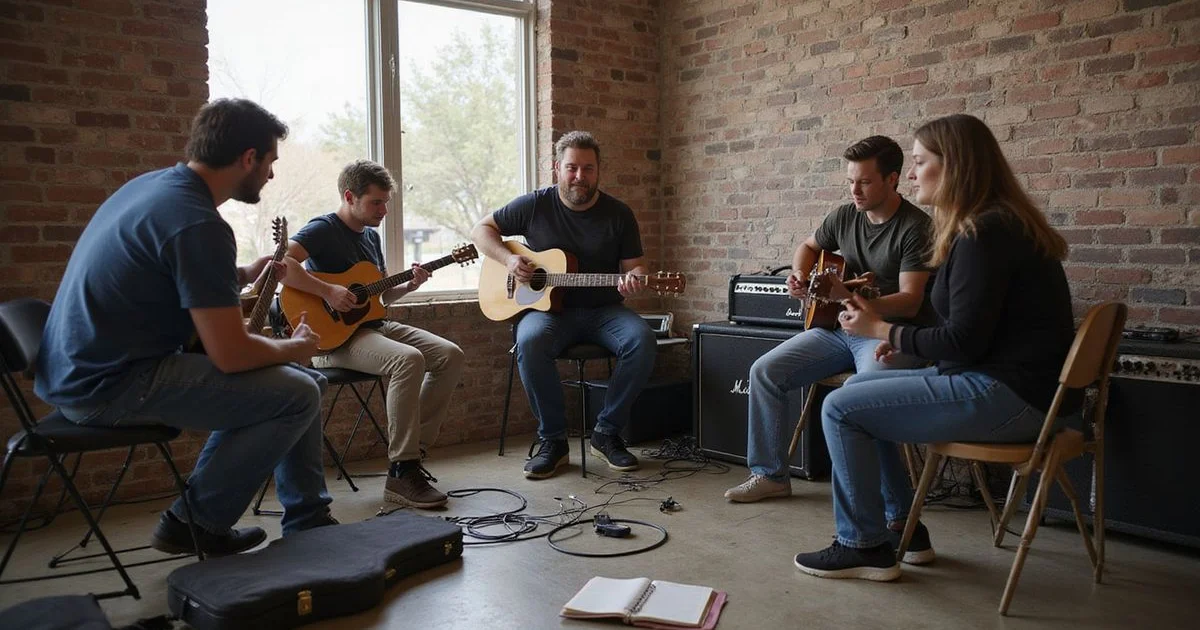
At a jam session, someone says a key and a form, “blues in A” or “let’s do something in G”, and counts it in. Everyone finds their place and it runs. Songs last as long as they last. People trade parts. Somebody solos and everyone else supports.
That’s it. There’s no rehearsal, no set list, and no audition to get in the room.
The Skill Is Listening
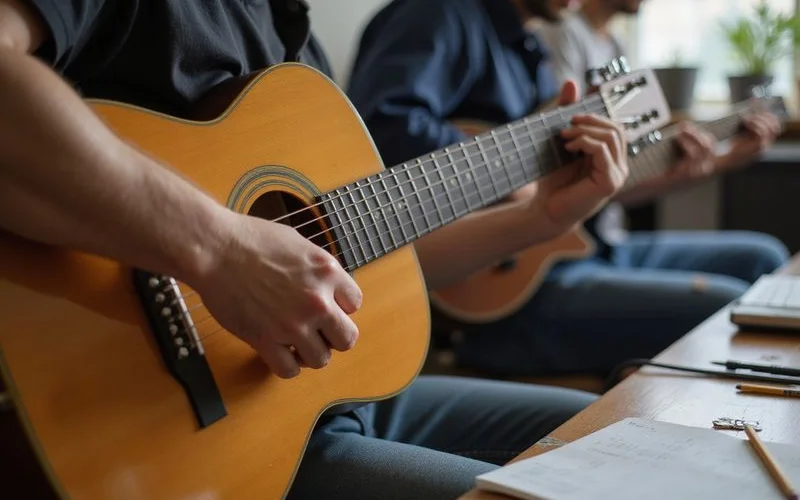
The instinct at your first jam is to fill every space. Resist it. What makes a group sound good is people leaving room for each other, and the fastest way to become welcome at any jam is to play less than you think you should.
Listen for two things: the pulse (where the beat actually is, which the rhythm players are defining) and the chord (what everyone else is on). Once you have both. You can contribute even if you play very little.
Simple Roles That Always Work
Hold the rhythm. Play the chord progression steadily while others do other things. This is the single most useful job in any jam and it’s always in short supply.
Play sparsely. Long chords, letting them ring. Adds texture without crowding.
Sit out. Not playing during a section is a legitimate musical decision. Listening while holding your guitar is not failing.
Double someone else. Play the same rhythm part as another player. Sounds fuller and takes the pressure off.
When you get lost
Stop playing. Listen for the root of the current chord. Come in at the top of the next section. Two seconds, and nobody notices as much as you do.
Easy Progressions to Know
Two things cover an enormous share of what gets called:
The 12-bar blues. Three chords in a fixed pattern. Learn it in one key and you’ll follow blues jams anywhere.
I–V–vi–IV. The four chords under a very large slice of popular music. Knowing the pattern by numbers rather than by letters means you can transpose it instantly.
Learning progressions by number rather than by chord name is the practical shortcut here, and it’s why the Nashville number system comes up so often, more on that in following a chord chart.
Before Your First One
Two things worth doing in the week before, neither of which takes long.
Learn a 12-bar blues in A and in E. These come up constantly, and being able to follow one means you’re never completely lost.
Practise counting yourself in. “One, two, three, four” out loud while you start playing. It sounds trivial and it’s the thing that most often goes wrong when people are nervous.
That’s genuinely all the preparation required. There’s no set list to learn and nobody expects you to arrive with material.
What Happens After a Few Sessions
The change most people notice first is in their timing. Playing alone lets you drift; playing with others doesn’t, and a few hours in a room does more for your internal clock than months of metronome practice.
The second change is ear. You start hearing chord changes coming before they arrive, because you’ve had to. That skill transfers directly into learning songs from recordings and into improvising with intent rather than by trial and error.
The third is social, and it’s the one people underestimate. After a few sessions you know names, and knowing other players is what turns a solitary hobby into something you keep doing.
Just Go
The jam sessions are all-levels and free with every subscription. Beginners are genuinely welcome, not tolerated, welcome, because a room needs rhythm players more than it needs another soloist.
Bring a guitar or borrow one. Nobody is counting your contributions, and one hour in a room will teach you things about timing and listening that six months alone will not.