Reading Ahead, Not At
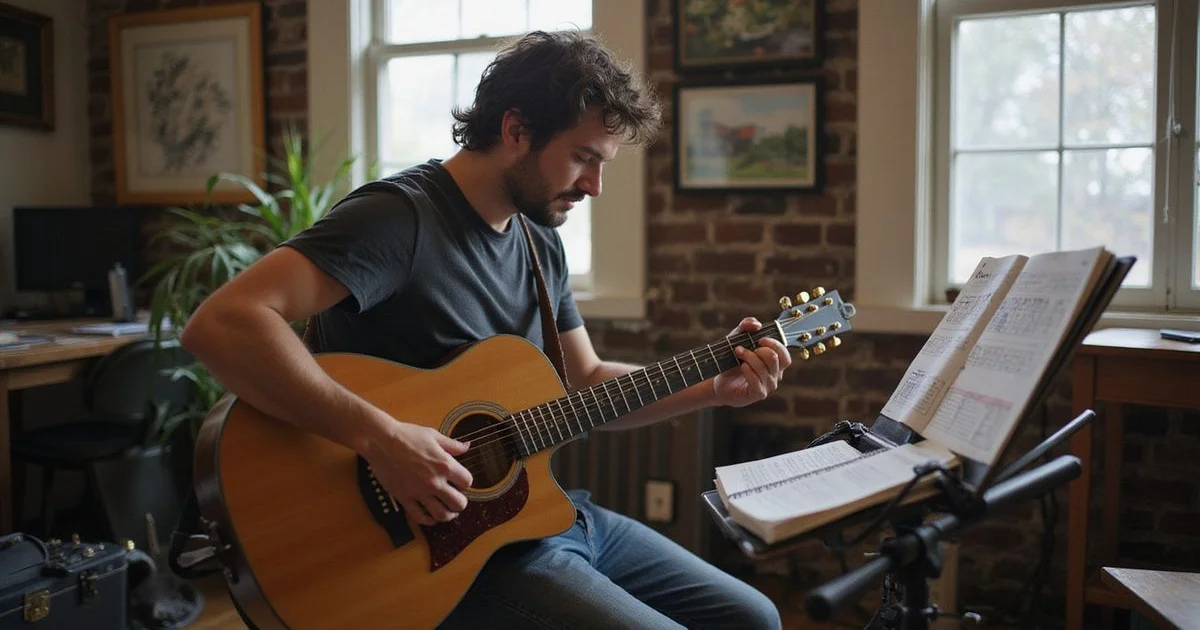
The mistake every beginner makes at their first jam session is reading the bar they’re currently playing. By the time you’ve read it, it’s gone.
Keep your eyes one bar ahead. Play from memory what you read a moment ago. It feels like a delay at first and becomes automatic quickly, the same skill a driver uses looking down the road rather than at the bumper in front.
Charts are usually sparse: four bars a line, a chord name per bar, section labels. That’s deliberate. There’s less to read so you can keep moving.
Numbers Beat Letters
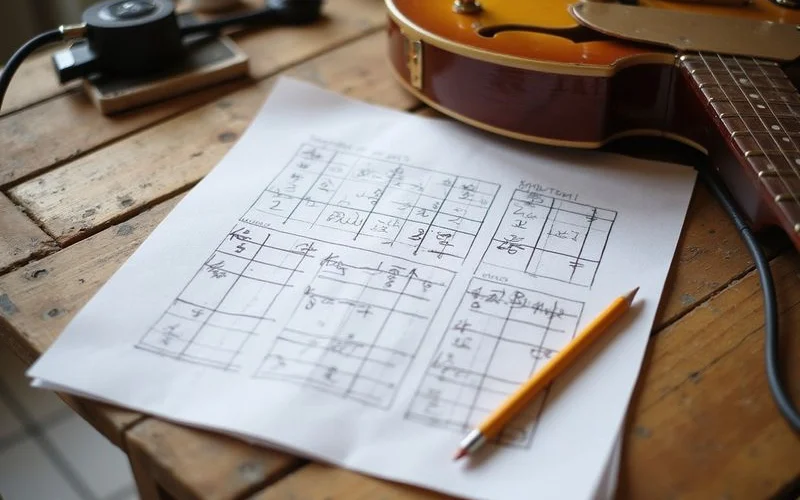
Working musicians often write charts as numbers relative to the key, the Nashville number system. A progression written 1-5-6-4 works in every key, so when a singer needs the song a step lower, nobody rewrites anything.
Learn progressions as shapes rather than as specific chords, and following an unfamiliar tune gets far easier. You stop tracking six letters and start recognising one familiar pattern.
Choosing Notes That Fit
Improvising over changes doesn’t require a large vocabulary. It requires the right notes at the right moment.
Start with roots. Play only the root note of each chord as it passes. Sounds sparse and lands correctly every time.
Add thirds. The note that tells you whether a chord is major or minor. Landing on it sounds deliberate.
Then fill between. Scale tones connect the targets. But the targets are what makes it sound intentional. The scale is just the road between them.
Being able to find those chord tones anywhere on the neck is exactly what the CAGED system provides.
The rule that outranks everything
Rhythm beats note choice. A simple phrase in the pocket sounds good; a clever phrase out of time doesn’t.
Staying in the Pocket
Lock to the rhythm players, not to your own internal count. In a group, the collective pulse is the truth, and your job is to fit into it rather than to insist on your own.
If you lose it: stop, listen for the downbeat, come back at the top of the next section. Everyone does this, and jamming with other musicians covers the rest of the etiquette around it.
Chart Shorthand You’ll See
Charts vary by who wrote them, but a few conventions are near-universal.
Slashes mark beats within a bar. Four slashes means four beats on that chord.
Repeat marks save writing out a section twice.
Section labels, V for verse, C for chorus, B for bridge, tell you the road map.
Numbers instead of letters mean the chart is written relative to the key, so it transposes instantly.
None of it takes long to learn, and knowing it means a chart handed to you thirty seconds before a song starts is usable rather than intimidating.
Building the Habit
The fastest way to get comfortable is to chart songs you already know. Write out the progression for something you can play from memory, then follow your own chart while playing it.
That splits the skill in two: writing charts teaches you to hear structure, and reading your own teaches your eyes to stay ahead of your hands. Both are much easier to build on familiar material than in a room full of people playing something you’ve never heard.
Building Up to a Solo
There’s a ladder, and skipping rungs is why first solos go badly.
- Play rhythm confidently through a whole song
- Play the roots of each chord over one section
- Add thirds and a few connecting notes
- Play a short phrase, four notes, with space around it
- Take eight bars
- Take a full chorus
Each rung is comfortable before the next. Space is the thing most new soloists leave out, and it’s what makes phrases sound like statements rather than exercises.
The jam sessions are where all of this gets practised for real, and they’re included with every subscription. Playing over live changes teaches this in a way no backing track manages, because a room reacts and a recording doesn’t.