What Guitar Lessons Cost in Austin
Guitar lessons here run on a monthly subscription with three tiers, all month-to-month:
| Format | Sessions per month | Monthly cost |
|---|---|---|
| 50 minutes, weekly | 4 | $469 |
| 50 minutes, biweekly | 2 | $300 (most popular) |
| 30 minutes, weekly | 4 | $359 |
No registration fee, no annual commitment, and nothing hidden behind a phone call. This is the full price list.

At $469 a month, four 50-minute sessions work out to roughly $117 each. That sits above the typical independent instructor rate in Austin, and it should, because the lesson hour is only part of what the subscription buys. The rest is the community programming and the fact that your teacher plays over 100 shows a year, which is what makes the adult guitar lessons approach possible in the first place.
The tier most people underestimate
Biweekly 50-minute lessons at $300 give you more actual instruction time per dollar than 30-minute weekly at $359. If budget is the constraint, that’s usually the better trade.
What Every Subscription Includes
The same list applies at all three tiers. There is no premium version.
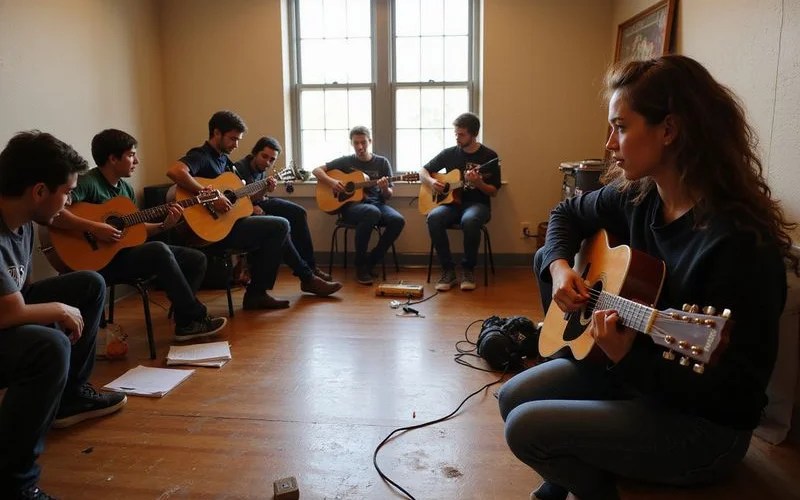
- The Sessions, the monthly members-only open mic, typically 20 to 30 players
- Songwriting Circles, a working session for developing original material
- Jam Sessions, all-levels, beginners genuinely welcome
- A detailed written recap after every lesson, so practice between sessions has a target
- A video recap of every session for remote students
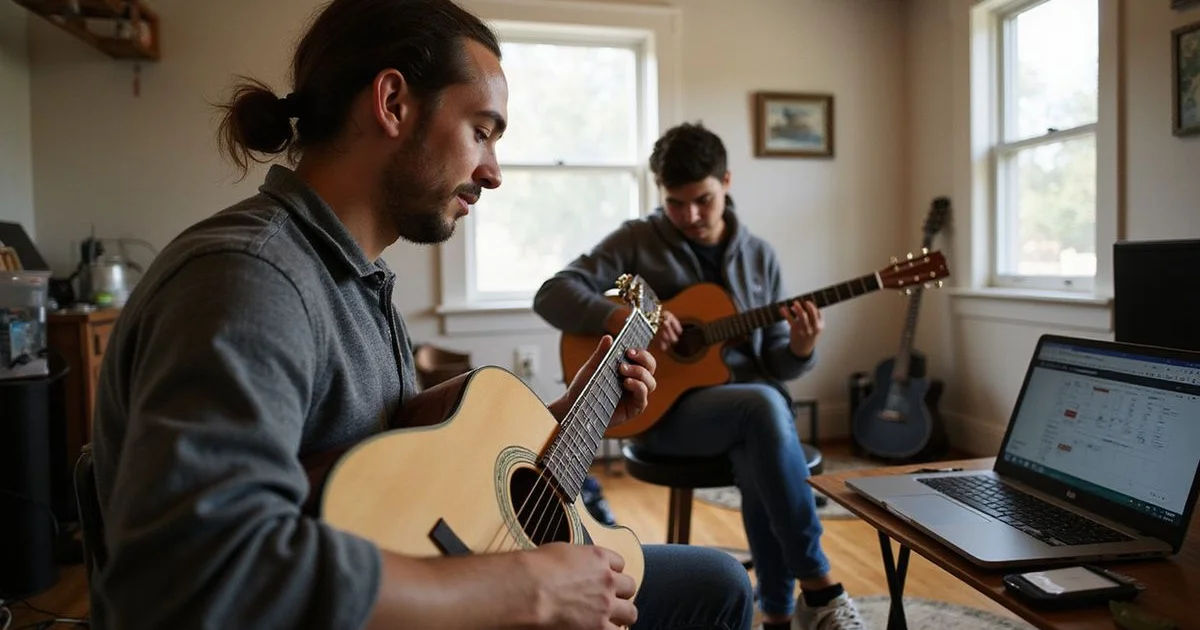
- One-on-one jam time with drum tracks and real amps for in-person students
- Bring-your-own-gear coaching so you learn to use your actual rig, not the studio’s
Community programming costs nothing extra and has no minimum-months requirement. That’s the piece competitors either don’t run at all or charge separately for.
Choosing a Tier
Pick 50-minute weekly if you want the fastest progress and have the practice time to feed it. Fifty minutes is long enough to cover technique, a song, and the theory underneath it without rushing any of the three.
Pick 50-minute biweekly if budget or schedule is tight. Two full sessions a month with focused practice between them beats four rushed ones, and it’s the most popular choice for a reason.
Pick 30-minute weekly if you’re booking for a younger child, or you specifically want the accountability of a weekly touchpoint. For most kids under about ten, attention span is the limiting factor rather than material, which is exactly what the 30-minute format is for.
If you’re starting from zero and unsure how much time you’ll realistically give it, the beginner lessons page explains what the first eight weeks demand.
Month-to-Month, Genuinely
Lessons are billed monthly through the scheduling system, and you can change tiers or stop without a penalty conversation. A heavy month at work shouldn’t cost you a contract, and a student who’s lost interest shouldn’t be quietly billed for another quarter.
That flexibility is also what makes the free consult honest. When there’s nothing locking you in, there’s no reason to talk anyone into a plan that doesn’t suit them, including telling you that another teacher, or waiting six months, is the better call.
How the Subscription Works
Billing runs monthly through the scheduling system, and your lesson slot is held for you week to week. There’s no registration fee, no materials fee, and no annual commitment.
Changing tiers is straightforward, students move between weekly and biweekly as their schedules change, and it takes a conversation rather than a form. Pausing for travel or a heavy month at work is equally normal.
Cancelling applies to future billing periods rather than clawing back the current one, so the most a change of mind ever costs you is the month you’re already in.
Comparing Against the Austin Market
Independent instructor rates in Austin vary widely, and plenty sit below these. It’s worth being clear about what accounts for the difference rather than pretending it isn’t there.
Three things. The community programming, which most competitors don’t run at all and which would be a separate cost if they did. The performer credential. An instructor playing 100+ shows a year gives you answers that come from a stage rather than a book. And the written recap after every lesson, which is what makes the practice between sessions productive rather than approximate.
Whether that’s worth the difference is a fair question, and the free consult is the cheapest way to answer it.
Start Before You Spend
The free 15-minute consult over Google Meet is where the tier question actually gets answered. Bring your schedule, your goals, and whatever gear you already own, and you’ll get a straight recommendation rather than a default upsell.
Nothing is sold on that call. Most people leave it knowing which tier fits and roughly what their first three months look like, which is a better position to spend money from than a pricing table alone. When you’re ready, book a free consult.