The Real Question Behind the Question
Most parents asking this aren’t asking about their child’s musical potential. They’re asking whether they’re about to spend several hundred dollars on something that gets abandoned in six weeks.
Fair question, and it deserves a direct answer: some children stick with it and some don’t, and no instructor can promise otherwise. What can be structured is how much that costs you if it goes the second way, and that structure is built into how kids guitar lessons are billed.
What Actually Keeps Kids Playing
Songs they recognise, early. A child who can play something a grandparent names will practise. A child working through page fourteen of an exercise book usually won’t. That’s the single biggest lever, and it’s why real repertoire comes before drills.
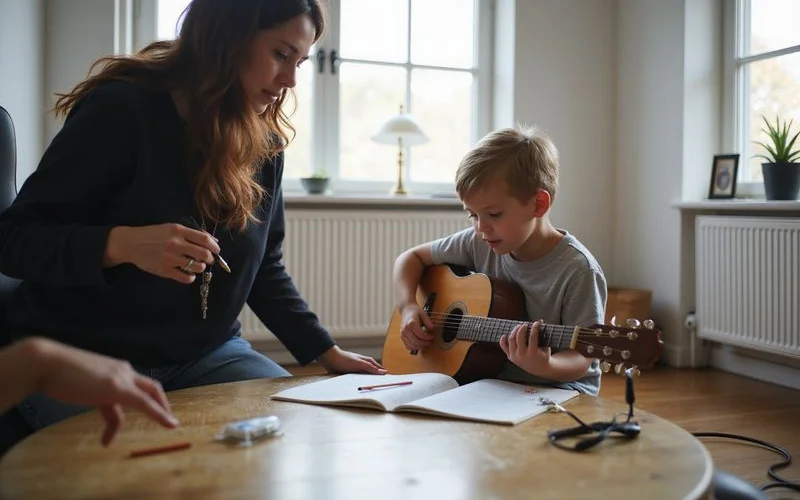
Sessions that end well. Thirty focused minutes that finish on a win beat fifty that finish in frustration. This is most of the argument for the shorter format with younger kids.
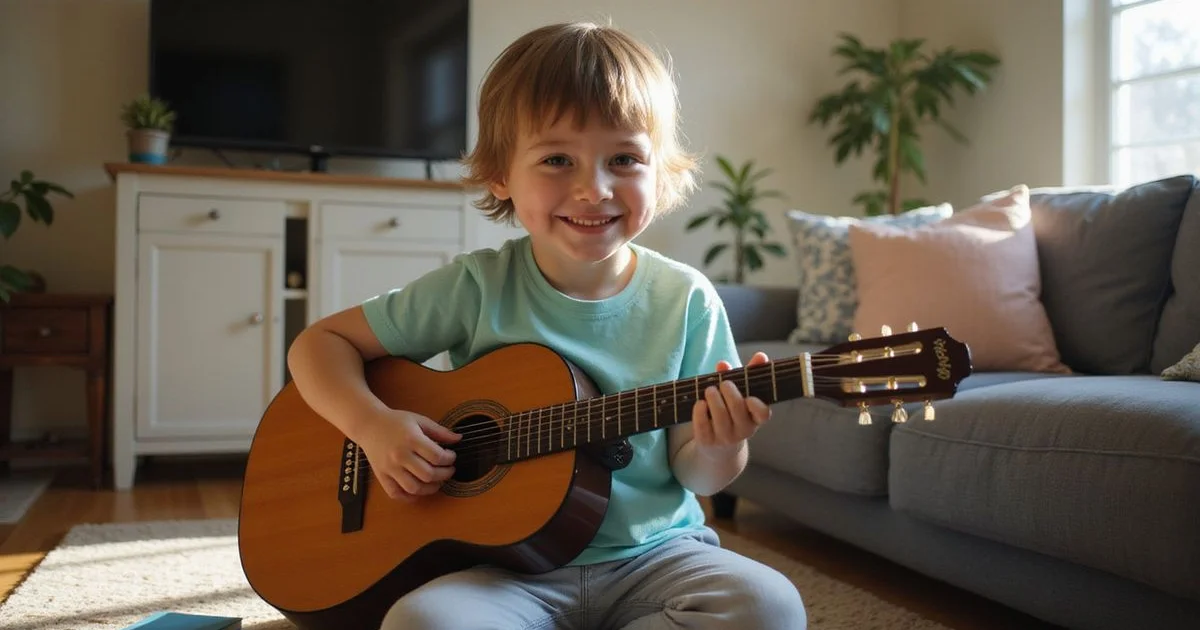
An instrument that doesn’t hurt. A full-size steel-string on small hands causes sore fingertips and quiet quitting. A 3/4 or half-size guitar, often with nylon strings, removes that entirely.
No pressure from home. Interest survives encouragement and dies under enforcement, reliably.
The clearest signal it’s working
They pick the guitar up when nobody asked them to. That matters more than practice logs, and you’ll notice it long before any formal progress marker.
Realistic Expectations for Six Months
Clean single notes, simple chord shapes, a steady strum, and a handful of songs they can play start to finish. Progress in bursts rather than a smooth line, with flat weeks that are normal rather than warning signs.
What six months does not produce is a recital piece or fluency. Anyone promising that is selling something, and setting that expectation is how parents end up disappointed by genuinely good progress.
Why Month-to-Month Matters Here
Lessons are billed monthly with no contract and no sign-up fee. If your child loses interest in March, March is the last month you pay.
That structure is what makes an honest conversation possible. There’s no incentive to keep a disengaged student enrolled, so if attention is genuinely gone you’ll hear it, along with whether it’s boredom with the material, an instrument that’s uncomfortable, or a genuinely overloaded schedule. Those have different fixes, and one of the fixes is stopping for six months and coming back.
What Usually Goes Wrong
When a child stops, it’s rarely a sudden loss of interest. Four causes account for most of it.
The instrument hurts. A full-size steel-string on small hands. Fixable with the right size and nylon strings.
Nothing sounds like music yet. Too many exercises, not enough real songs. Fixable, and worth raising directly.
Practice became a fight at home. Enforcement kills interest faster than anything. Better to shorten it than to escalate.
The schedule got too full. Sometimes a genuine reason, and stopping for a season is a legitimate answer.
Restarting Later
A child who stops at nine and picks it up again at thirteen has not wasted the earlier lessons. Basic coordination, chord shapes, and most importantly. The sense that music is something they can do rather than something other people do all survive the gap.
Plenty of teenagers here are second-time students, and they typically move faster than absolute beginners for exactly that reason. If interest genuinely goes, stopping cleanly and leaving the door open beats grinding on until they associate the instrument with obligation.
Before You Commit Anything
The free 15-minute consult is a conversation with you, not a pitch. Age, readiness, gear, and timing all get covered, and if the honest answer is to wait a year, that’s what you’ll hear.
The full parent-facing picture is on the kids guitar lessons page. When you’re ready, book a free consult.