Why a 90-Day Map Helps
Signing up for something open-ended is uncomfortable. The most useful thing anyone can give you before you start is a realistic picture of what three months looks like, so you can tell the difference between normal slowness and actually being stuck.
What follows assumes a complete or near-complete beginner in adult guitar lessons, practising fifteen to twenty focused minutes most days. Less practice stretches the timeline; it doesn’t change the order.
Month One: Getting the Instrument to Cooperate
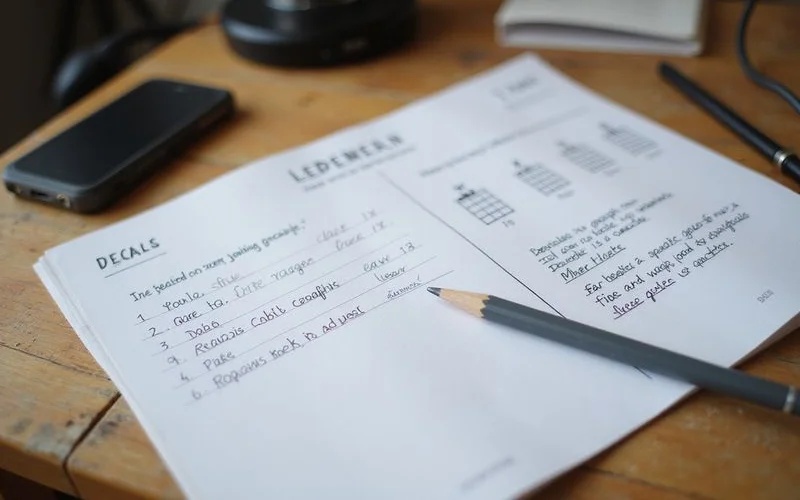
Holding the guitar so your fretting hand isn’t fighting you. Tuning it reliably. First open chords, and. The actual work of month one, moving between two of them without stopping.
Somewhere between weeks three and five, a first full song. Simplified, but start to finish and recognisable. That milestone is deliberately early because it’s what carries people through the same weeks when fingertips hurt and changes still stall. There’s more detail on the timing in how long to play a song.
Theory checkpoint: how chord charts work, and why these particular three chords sound finished together.
What “on track” feels like: clumsy but functional. You can play something. It doesn’t feel easy yet.
Month Two: It Starts Sounding Like Music
Chord changes get faster and stop being the thing you think about. Strumming patterns arrive, which is what turns a sequence of chords into something with a groove. A second and third song, usually with one that stretches you slightly.
Barre chords normally get introduced here. They’re hard for everyone. They take weeks, and the difficulty is not a sign you’ve hit your ceiling.
Theory checkpoint: what a key is, why a capo moves an entire song, and the numbers behind a I–IV–V progression.
What “on track” feels like: the songs from month one now feel easy. That contrast is the clearest progress signal you’ll get.
The most common month-two mistake
Comparing yourself to players online instead of to yourself four weeks ago. The recap notes exist partly to make the second comparison possible.
Month Three: Building Real Repertoire
Songs get finished rather than half-learned. Playing along with a recording becomes possible, which is a bigger step than it sounds. It means your timing is holding without someone counting.
Depending on where you’re headed. This is where the path starts to branch: fingerpicking and repertoire for acoustic players, riffs and lead technique for electric, chord voicings and harmony for anyone who wants to write.
Theory checkpoint: starting to hear where a progression is going before it gets there.
What “on track” feels like: you have two or three songs you could play for someone without warning.
The 90-Day Summary
| Playing | Theory | Feels like | |
|---|---|---|---|
| Month 1 | First chords, first full song | Chord charts, why chords fit | Clumsy but functional |
| Month 2 | Strumming patterns, 2–3 songs, barre chords begin | Keys, capo, I–IV–V | Month 1 now feels easy |
| Month 3 | Finished repertoire, playing with recordings | Hearing progressions | You could play for someone |
What Slows People Down
Three things, in order of how often they come up.
Inconsistent practice. Not lack of time, lack of a fixed slot. Fifteen minutes five days a week beats ninety minutes on Sunday, and the students who progress fastest are almost always the ones with the most consistent small sessions. If your calendar is the obstacle, guitar lessons for busy adults covers how to fit it around a working week.
Skipping the uncomfortable material. Barre chords, counting, the change that keeps failing. Practice routes around difficulty by default, and that’s precisely why a target from a recap matters.
Comparing yourself to the wrong benchmark. Players online, or a friend who’s been playing twenty years. The useful comparison is you, four weeks ago.
After the First 90 Days
Month four onward is where the path branches by what you want. Fingerstyle and repertoire for acoustic players, lead technique and tone for electric, harmony and fretboard work for anyone who wants to write or improvise.
It’s also usually when community programming starts to matter. Playing with other people exposes timing and listening gaps that solo practice never will, and most students find it accelerates everything else once they have enough under their fingers to take part.
What Isn’t in the First 90 Days
Honesty matters more than optimism here. You won’t be improvising fluently, playing fast lead lines cleanly, or handling every barre chord comfortably. Those come later and they come reliably, but not in twelve weeks.
What you will have is a foundation that doesn’t need unlearning, which is the actual difference between guided and self-taught starts. The full picture of how the sequence continues is on the adult guitar lessons page.