The Format
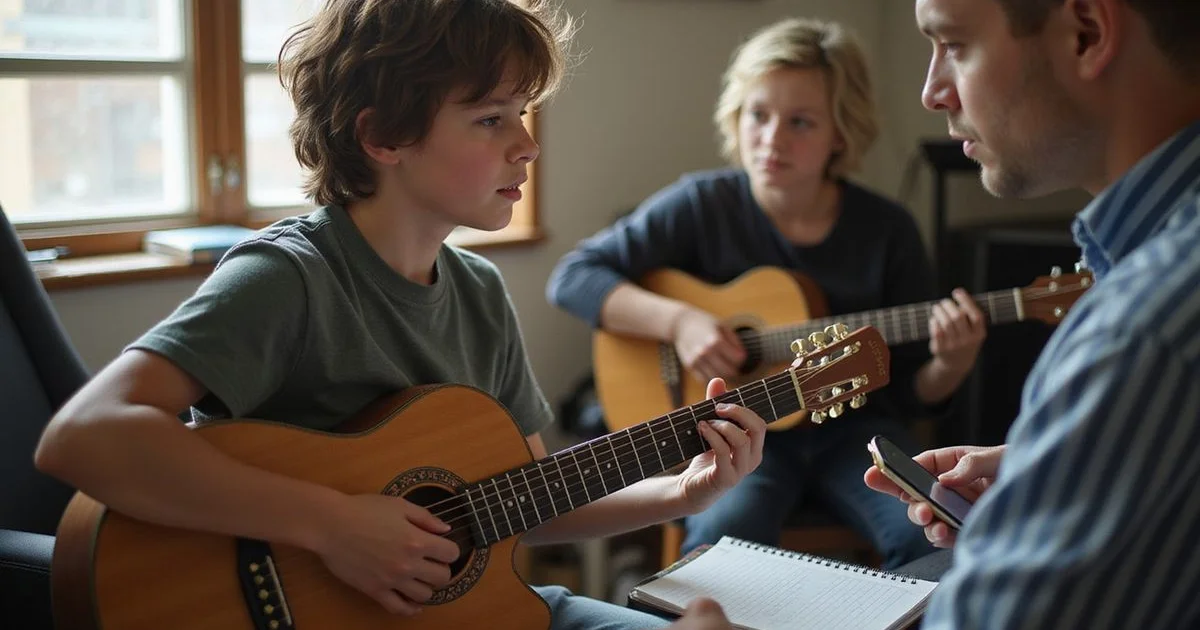
Teen guitar lessons run weekly or biweekly, 50 minutes for most teens, in person at the East Riverside studio or online over video. Month-to-month, no contract.
Fifty minutes is usually right at this age. There’s time to work on a song, fix the technical thing holding it back, and cover the theory that explains it, without the session turning into a race.
Goals Come From the Teen
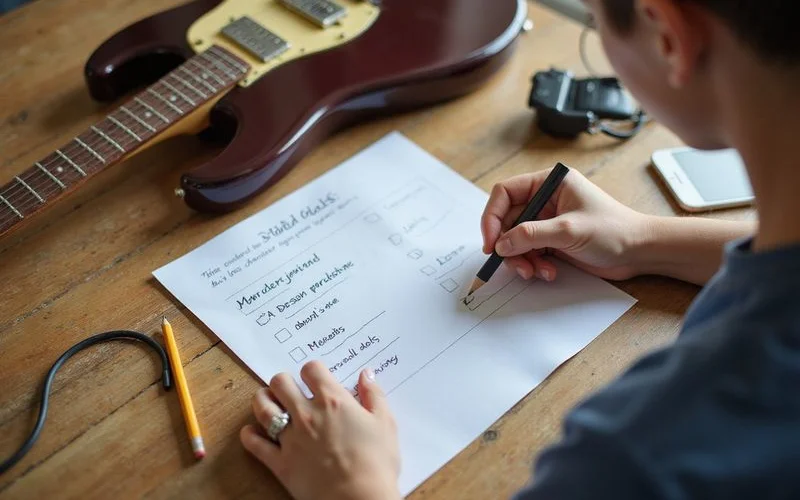
The first conversation is about what they actually want. Sounding like a specific band. Playing with friends. Writing their own material. Getting through a school band audition or a talent show.
That target shapes the sequence. Technique, rhythm, and applied theory all still get covered, but inside the music they chose rather than through a generic syllabus. A sixteen-year-old who’s been handed a method book stops practising within a month; one working toward a riff they care about does not.
The most useful thing a parent can do
Let the goal belong to the teen. Ownership is the single strongest predictor of whether the practice happens.
How Progress Gets Tracked
Every lesson ends with a detailed written recap: what was covered, what to practise, and at what tempo. It’s the practice plan for the week, and it also means parents can see what’s happening without having to ask after every session.
Progress at this age is rarely linear. A month of visible improvement, then a plateau, then a jump. The recaps make that pattern visible, which stops a normal flat month from being read as losing interest.
The Community Part
This is what most teens end up caring about most.
Every subscription includes all-levels jam sessions, Songwriting Circles for original material, and The Sessions, a monthly members-only open mic with 20 to 30 people. Free, no extra fee, and entirely optional.
For a teenager, playing with other people for the first time is the thing that turns practice from homework into a reason. Watching a room of players who are all somewhere on the same path does more for motivation than any amount of encouragement from an adult.
What the First Three Months Cover
Assuming a starting point somewhere near zero: the first month gets the instrument comfortable and a first recognisable song under their hands. The second builds chord changes and strumming to the point where songs stop stalling. By the third, most teens have two or three songs they can play through and are starting to work out parts by ear.
If they’re already playing. It looks different. The first lesson is usually diagnostic, finding the specific thing that’s been holding them at their current level, which is often rhythm or fretboard knowledge rather than the technique they assumed.
Either way, the material comes from bands they actually listen to. That isn’t a concession; it’s the mechanism that keeps practice happening in week seven.
Practice Between Lessons
Twenty focused minutes most days is the realistic target, and the written recap makes it specific enough to be achievable. “Practise guitar” gets ignored; “the chorus change at 70bpm until it’s clean twice” gets done.
Teens with heavy school schedules often do better with biweekly 50-minute lessons and steady practice than with weekly lessons and no time to absorb them. That’s a scheduling conversation worth having honestly rather than defaulting to the bigger plan.
For Parents
Rates are the same as adult lessons: $300 to $469 a month depending on length and frequency, month-to-month with no contract. Teaching hours run Tuesday to Saturday, and online lessons cover the weeks when the schedule doesn’t work.
You’ll get honest reporting, including if engagement drops. The full picture for this age group is on the teen guitar lessons page, and the free 15-minute consult is the fastest way to see whether it fits.