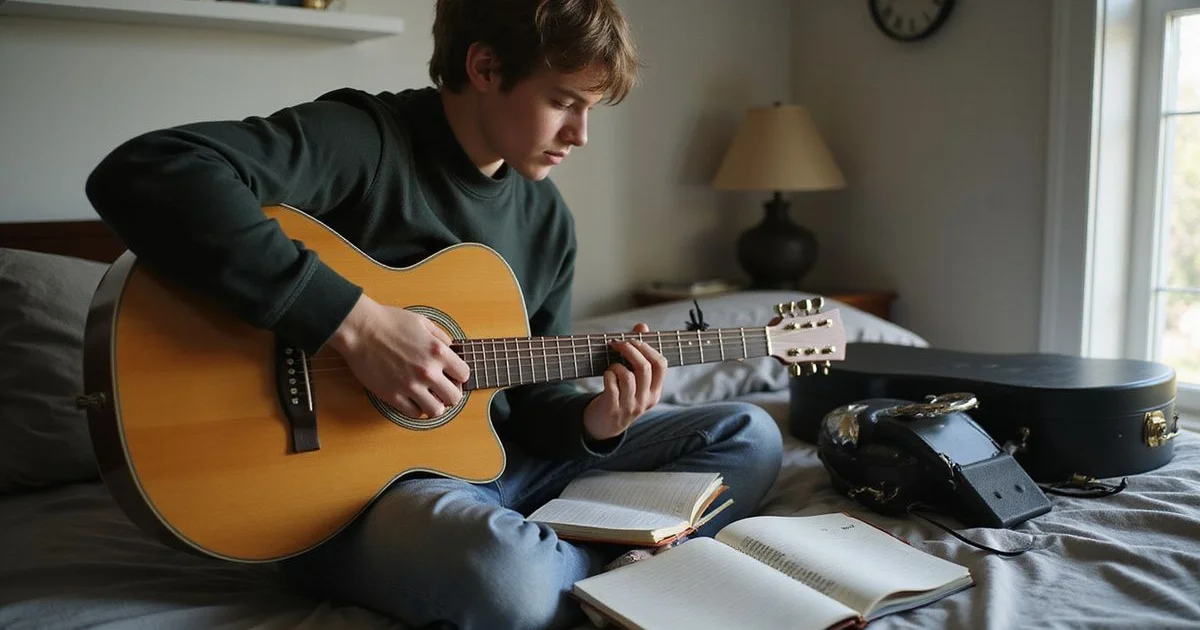
Start With What You Already Have
The most common reason a first song never happens is waiting for a complete idea to arrive fully formed. It doesn’t work that way for anyone, which is why songwriting shows up early in teen guitar lessons rather than being saved for later.
You start with a fragment. One riff. A chord loop that sounds good. A single line you wrote in your notes app. That fragment is enough, and the rest of the process is building outward from it rather than downward from some grand plan.
Record it immediately. A voice memo on your phone is the correct tool, half of all first songs are lost because nobody wrote them down.
The Structure That Carries Most Songs
Verse, chorus, verse, chorus, bridge, chorus. That’s the skeleton under an enormous share of popular music, and there’s a reason it keeps working.
- Verse, moves the story, changes lyrically each time
- Chorus. The hook, stays the same, usually the loudest and the highest
- Bridge. One section that goes somewhere else, so the last chorus lands harder
Your first song does not need a bridge. Verse-chorus-verse-chorus is a complete song and always has been.
The trick that makes a chorus feel like a chorus
Something has to change. Go higher, get louder, add the strum you were holding back, or drop to a single chord. Contrast is what makes a chorus land, not a better melody.
Words or Music First?
Either. Whichever one you have.
Music first is more common for guitarists. Find a chord loop, hum over it until a melody sticks, then find words that fit the shape of what you hummed. Nonsense syllables at this stage are normal and useful.
Words first works if you write already. Read the line out loud and notice its natural rhythm. That rhythm is already a melody waiting for notes.
Either way, finish a rough version before you polish anything. A complete bad song teaches you more than a perfect first verse.
Finishing Is the Hard Part
Starting songs is easy and most people have a phone full of fragments. Finishing is what actually teaches you to write.
Two habits help. Give yourself a deadline that isn’t self-imposed. A Songwriting Circle date works well, and playing it with other people is a stronger deadline than any you set alone. And accept that the first complete version will be worse than the idea was in your head. That gap is universal, it closes with practice, and it’s the main reason songs get abandoned at 80%.
A finished ordinary song teaches you more than a brilliant unfinished one.
Recording a Rough Demo
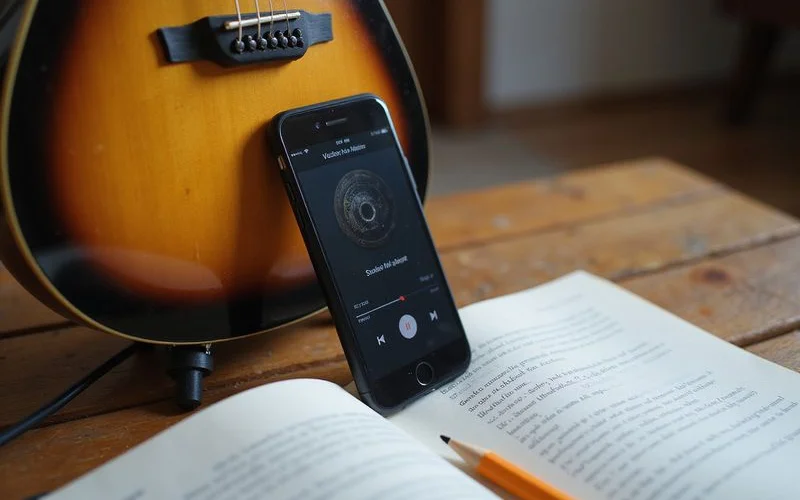
Your phone is enough. Prop it up, play the song through once, and keep it.
Two reasons. You’ll forget how it went, melodies vanish faster than anyone expects. And hearing your own song back is the fastest way to notice what isn’t working, in the same way that recording your playing exposes timing problems you can’t hear from inside.
Don’t chase quality at this stage. A rough recording that exists beats a good one you never got around to making, and nobody who helps you develop the song will care how it was captured.
Where to Take It
A finished song sitting on your phone is a fine outcome, but it improves fastest when other people hear it.
The Songwriting Circles are a working session for exactly this. Writers bring finished songs, half-written ones, and single riffs, and the room helps develop structure, lyrics, or melody. It’s collaborative rather than a critique panel, and you can attend just to watch. Both are included with every subscription.
Then, when it’s close, The Sessions open mic is where it gets played for a room of 20 to 30 people. Watching a song go from a notebook to a performance inside a couple of months is the most motivating thing that happens in teen guitar lessons.