It’s a Different Skill, Not a Harder One
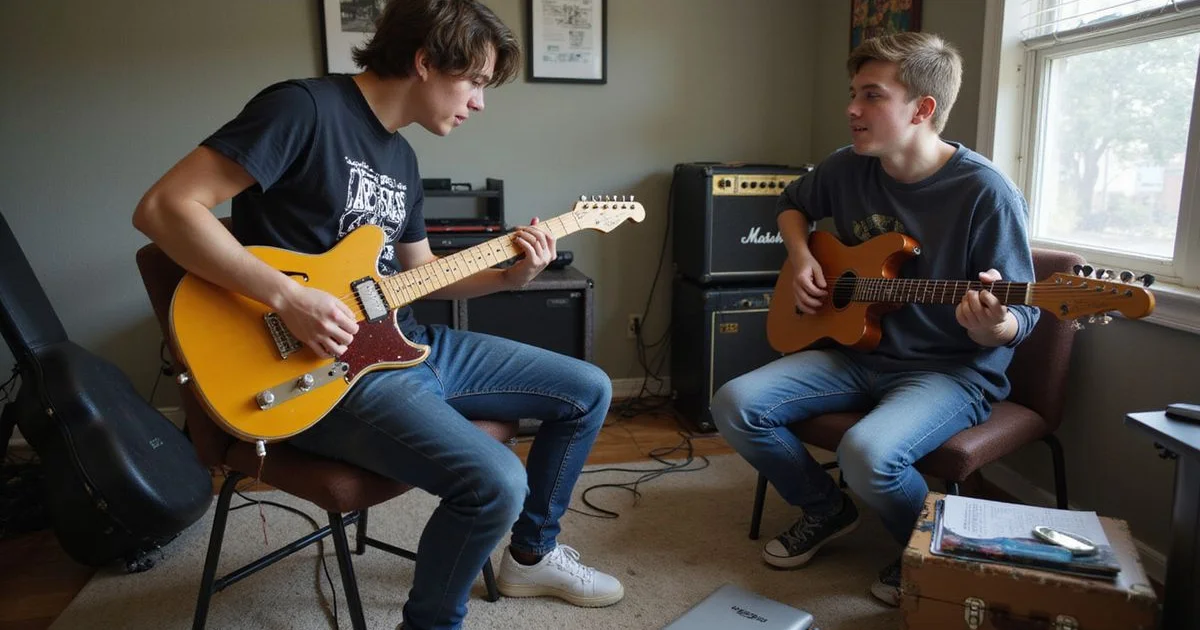
Playing alone and playing with other people are two separate skills, which is why teen guitar lessons build toward the second one early. A guitarist who sounds fine at home can feel completely lost the first time someone else is playing too.
Alone, everything waits for you. In a room. The song keeps moving. What that demands isn’t more technique, it’s listening, timing, and knowing when not to play. All three are learnable, and the only way to learn them is in a room.
What Group Playing Actually Asks
Keeping time without stopping. Alone, you pause to fix a mistake. In a group. You leave the mistake behind and land on the next downbeat. Recovering is more valuable than not slipping.
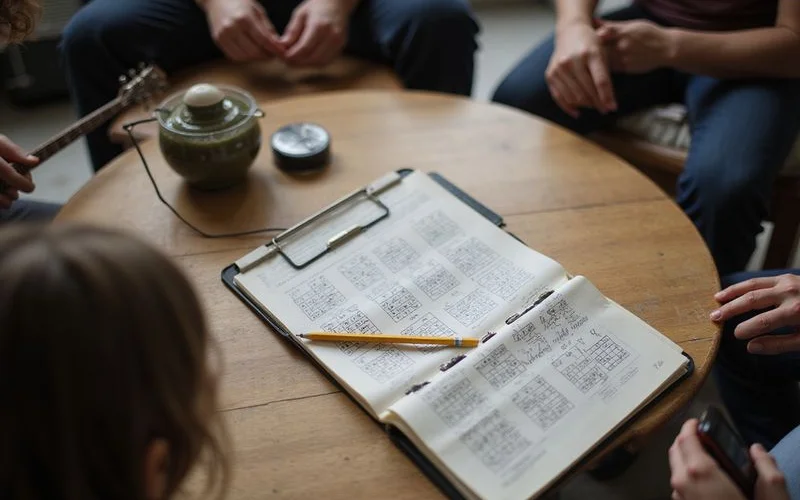
Following a chart. Someone calls a key and a form, and you track where the song is. This feels impossible for about twenty minutes and then it doesn’t.
Listening more than playing. The most common beginner instinct is to fill every gap. Restraint is what makes a group sound good, and it’s the fastest thing to learn because you can practise it while doing nothing.
Playing at the right volume. Blending rather than competing.
The thing that surprises everyone
How much better you sound. A simple part inside a group sounds fuller than anything you play alone, and it’s the single biggest motivation boost available.
How to Ease Into It
The jam sessions are built for exactly this. All levels, beginners genuinely welcome, and there’s no audition or preparation. Bring a guitar or borrow one.
A reasonable first jam looks like this: turn up, sit slightly out of the middle, play rhythm on the songs you can follow, and listen through the ones you can’t. That’s a complete and successful first session. Nobody is counting your contributions.
Once that’s comfortable, the next steps arrive on their own, trading a riff, taking a short solo, or bringing something you wrote yourself to play at The Sessions.
What to Practise Before Your First Jam
Very little, and none of it is technical.
Counting in. Out loud, four beats, then start. It’s the most common thing that goes wrong when nerves are involved.
Playing through a mistake. Deliberately fumble a chord at home and carry on without stopping. That’s a trainable reflex, and it’s the one that matters most in a group.
Holding one chord in time for two minutes. Boring, and it’s exactly what you’ll be doing for parts of the session.
What Changes After a Few Sessions
Timing improves first, and it’s not subtle. Playing alone lets you drift; playing with others doesn’t, and a few hours in a room does more for your internal pulse than months of solo metronome work.
Your ear improves second. You start hearing chord changes arriving before they land, which feeds directly into learning songs by ear.
The third change is confidence, and it’s the one that carries into everything else. Once you’ve played in a room with other people a few times, playing in front of anyone gets considerably less frightening.
About the Nerves
They’re normal and they’re worse in anticipation than in the room. Two practical things help.
Know one thing cold. Whatever you can play at 80% on a bad day. Nerves compress your technique, so your safest material is the right material.
Have a plan for getting lost. Stop, listen, come back at the next section. Having a recovery plan removes most of the fear, because getting lost stops being a catastrophe and becomes a two-second event.
For teens especially. This is the part that turns practice from a chore into something with a point, which is why it’s built into teen guitar lessons from early on rather than saved for “when you’re ready.”