Why It Hurts at First
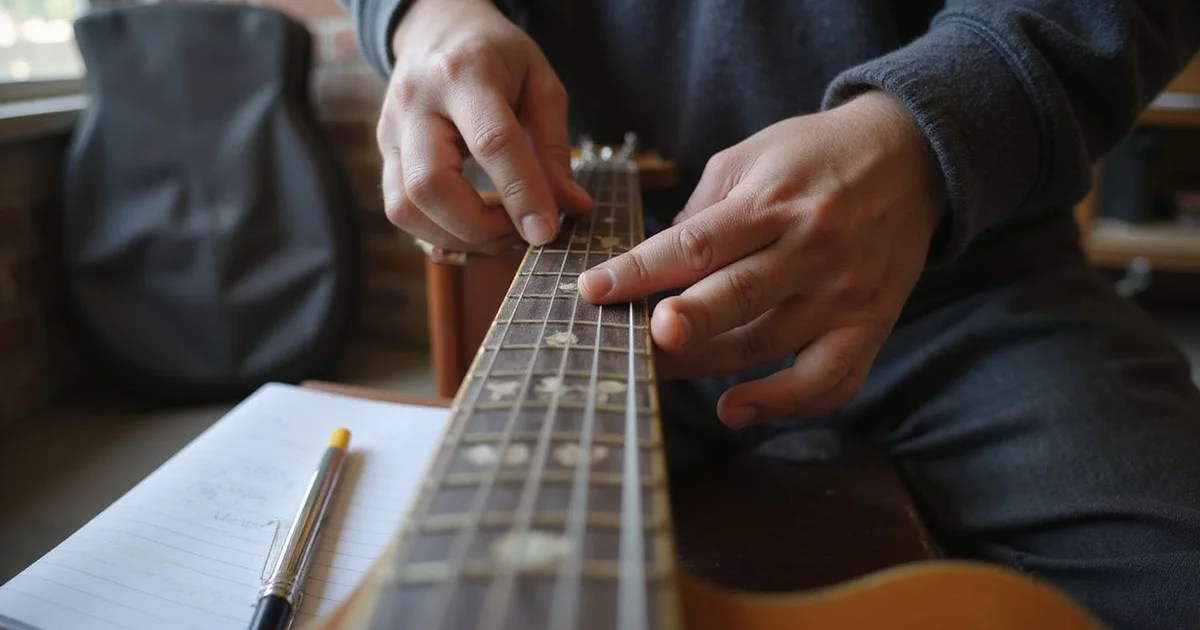
Your fingertips are pressing thin steel wire against a hard fretboard, using skin that has never done that before. Soreness in the first couple of weeks isn’t a sign of bad technique or an unsuitable instrument, and it’s the single most common thing new students raise in adult guitar lessons. It’s the expected response.
What’s happening underneath is straightforward: repeated pressure thickens the outer layer of skin. Once that layer builds, the nerve endings underneath are buffered and the discomfort largely stops. That’s a callus, and it’s the reason experienced players can practise for hours without noticing.
The Realistic Timeline
Days 1–5. Tender after ten minutes. Normal, and the main reason a first practice session should be short.
Weeks 1–2. The worst stretch. The skin is remodelling and hasn’t finished. Playing daily in short bursts is easier here than long sessions twice a week.
Weeks 2–4. Calluses form. You’ll notice one day that a chord you’d been wincing through doesn’t register anymore.
After that. Maintenance only. Regular playing keeps them, and they’ll be there as long as you keep touching the instrument.
Playing a little most days builds calluses faster than the same total time in two long sessions, because the skin responds to frequency. That happens to be the same schedule that builds technique fastest, which makes it an easy recommendation.
The signal that isn’t normal
Fingertip tenderness is expected. Sharp pain, or aching in your wrist, thumb, or forearm, is not. That’s usually hand position or a guitar that needs setting up, and both are fixable in one lesson.
Making the First Weeks Easier
Get the guitar set up. High action, strings sitting far off the fretboard, makes every chord require more force than it should. A setup at a local shop is inexpensive and it’s the single biggest comfort improvement available to a beginner.
Try lighter gauge strings. Lighter strings need less pressure. On an acoustic that’s a meaningful difference. Electric strings are already lighter, which is part of why electric feels kinder in month one.
Press only as hard as you need to. Most beginners squeeze far harder than required. Fret a note, then release pressure until it buzzes, then add a little back. That’s the actual amount.
Stop before it’s raw. Short sessions, more of them. Pushing to blistering costs you the next three days.
What Not to Do
Don’t file, glue, or alcohol-treat your fingertips. Every folk remedy along those lines either does nothing or damages the skin you’re trying to build. The process needs time and repetition, and there’s no shortcut worth the risk to your hands.
Structuring Practice Through the Sore Weeks
Short and frequent beats long and occasional, and during the callus-building stretch that’s doubly true.
Ten to fifteen minutes, several times a day if you can, is easier on your fingertips than one forty-minute session and builds calluses faster. Skin responds to repeated exposure rather than to total duration, which is the same reason short frequent practice sticks better than weekend marathons.
If your fingertips are genuinely too sore to fret, there’s still useful work available. Strumming muted strings builds your rhythm hand. Naming notes on the fretboard costs nothing physically. Listening to a song you’re learning and counting along is real practice.
What About Nylon Strings?
For adults, generally not worth switching to. Nylon feels easier for a fortnight, and then the transition back to steel restarts the process on a slightly different part of the fingertip.
For young children it’s a different calculation. Small fingers on steel strings often means genuine pain, which turns into “they lost interest” within a month. A nylon-string instrument at that age removes the barrier entirely, and switching later is easy once hands are bigger and the habit is established.
The Bigger Point
Finger pain is one of the top three quiet reasons beginners stop in week three, alongside slow chord changes and nothing sounding like music yet. All three peak at the same time and all three pass, which is worth knowing in advance.
The beginner lessons sequence is built around getting you to a recognisable song fast, precisely because having something to show for the discomfort is what carries people through it. And if the soreness isn’t easing after a month, raise it in a lesson, that’s a setup conversation, not a toughness one.