Start With the Right Question
Not “which is easier.” The useful question is: what do you want to be playing in a year? Beginner guitar lessons start from that answer rather than from the instrument.
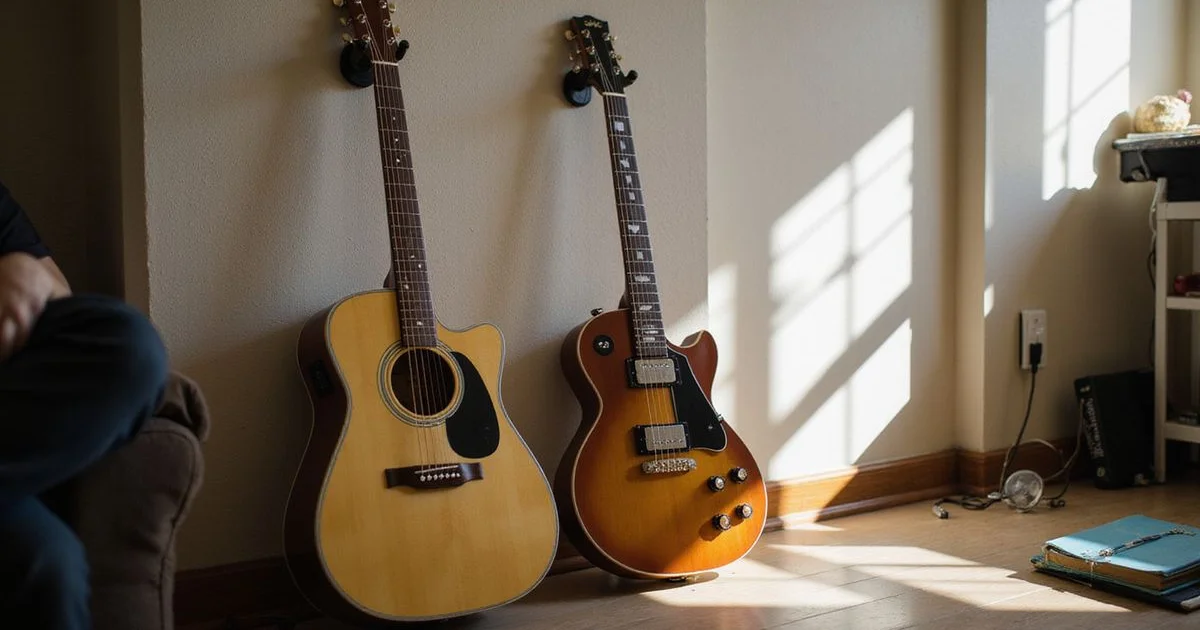
Picture the scene you’re after. Playing a song at a campfire or backing your own voice at a coffeehouse points to acoustic. Chasing a specific riff, a tone, or playing in a band points to electric. That picture is a better guide than any difficulty comparison, because the instrument you’re excited to pick up is the one you’ll actually practise.
The Difficulty Myth
“Learn on acoustic first, it’s harder. It builds strength” is repeated constantly and it’s mostly wrong.
Acoustic strings are heavier and the action is usually higher, so fretting takes more force. That’s real. It also means slightly more finger soreness in the first weeks and slightly harder barre chords.
Electric has lighter strings, lower action, and a slimmer neck. Physically kinder in month one. But you need an amp and a cable before it makes a sound, and an amp introduces its own small learning curve.
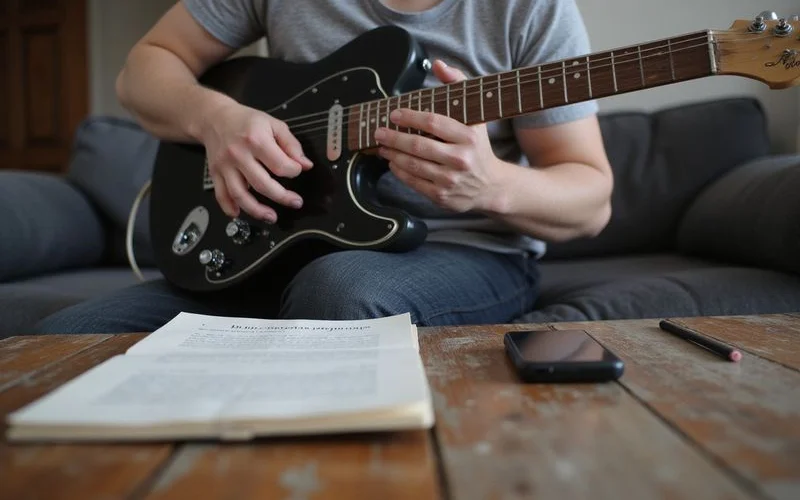
Neither is meaningfully harder to learn on. Both teach the same chords, the same rhythm, the same fretboard. Any student who starts on electric and later picks up an acoustic adapts within a couple of weeks.
The one difficulty difference that matters
An acoustic with high action is genuinely hard to play, and it’s the most common reason beginners think they’ve failed. A setup fixes it and costs less than a month of lessons.
Side by Side
| Acoustic | Electric | |
|---|---|---|
| Starter cost | $235–$515 all in | $385–$735 with a small amp |
| Extra gear needed | None | Amp, cable |
| Physical difficulty | Slightly higher | Slightly lower |
| Practise quietly | No | Yes, unplugged or with headphones |
| Typical repertoire | Folk, singer-songwriter, coffeehouse, campfire | Rock, blues, riffs, lead playing |
| Best if you want to | Sing while you play | Chase a tone or play in a band |
The full gear breakdown is in what gear you need to start.
The Quiet-Practice Advantage
One point that rarely gets raised and matters a lot in apartments and shared houses: an electric guitar unplugged is very quiet, and with headphones through a small amp it’s silent to everyone else.
If your practice window is 10pm in a thin-walled apartment, that’s not a minor detail. It’s the difference between practising most days and practising twice a week.
What Doesn’t Change
Chords, rhythm, timing, fretboard note names, and theory are identical on both. That’s the majority of what you learn in the first year, and it’s why beginner guitar lessons run the same core sequence either way.
What differs is repertoire and gear knowledge, and that’s exactly where the two paths split into acoustic lessons, fingerpicking, strumming pocket, campfire and coffeehouse repertoire, and electric lessons, which cover tone, rigs, lead versus rhythm, and getting off the pentatonic box.
Cost Over the First Year
The gap narrows once you look past the initial purchase. An acoustic needs strings a few times a year and not much else. An electric adds picks, cables that eventually fail, and. If you catch the bug, an overdrive pedal somewhere around month six.
Neither is expensive enough to be the deciding factor. If you’re within about $200 of affording either, buy the one you want rather than the one that saves a little, because the one you want is the one that gets picked up.
What Students Actually Do
Most players end up owning both eventually, usually within two or three years. They start with whichever one drew them in, and the second instrument arrives when the music they want to play calls for it.
That pattern is worth knowing because it takes the pressure off the decision. This is not a permanent commitment to a musical identity. It’s your first guitar, and being wrong about it costs you almost nothing since everything you learn carries across.
If You Still Can’t Decide
Start acoustic. It’s cheaper, needs nothing else, and every skill transfers. Or bring both questions to the free 15-minute consult with the three songs you want to play, the songs usually answer it for you.