An Honest Map of the First Two Months
Starting from zero is much easier when you know the shape of what’s coming. What follows is the actual early curriculum from beginner guitar lessons, assuming weekly lessons and fifteen to twenty focused minutes of practice most days.
Nobody hits these exactly. The order holds regardless.
Weeks 1–2: Making the Instrument Cooperate
Posture and hand position. Where the guitar sits, where your thumb goes, and how to fret a note without squeezing. Most beginners press about three times harder than necessary, which causes both fatigue and sore fingertips.
Tuning. With a clip-on tuner, every single time you pick it up. An out-of-tune guitar quietly trains a bad ear.
First open chords. Usually two or three that appear in an enormous number of songs.
One clean strum in time. Not a pattern yet. One downstroke that lands where it should.
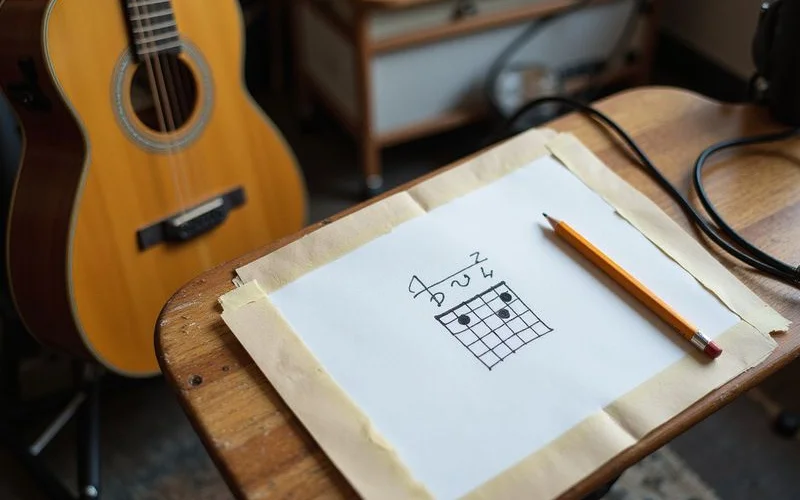
Reading chord charts. The notation you’ll use for years, learned in five minutes.
Week two is not a talent test
Sore fingertips and chords that buzz are universal at this stage. Both resolve. Neither predicts anything about whether you’ll be good at this.
Weeks 3–5: Changes and Your First Song
This stretch is where the real work happens, and it’s almost entirely about chord transitions. Knowing two shapes is easy. Moving between them without a stall is the steepest part of the whole learning curve, and it’s short.
Alongside that: strumming patterns beyond a single downstroke, and pick versus fingers depending on the music you want.
Then the payoff. Somewhere in here you play a full song, simplified, but complete and recognisable. That’s deliberately early, because having something to show for the discomfort is what carries people through weeks three and four.
Theory checkpoint: why these three chords sound finished together.
Weeks 6–8: It Starts Sounding Like Music
Chord changes stop occupying your whole attention. A second and third song arrive, usually with one that stretches you slightly. Barre chords get introduced, hard for everyone, several weeks to settle, and not a signal about your ceiling.
Timing gets attention here too. Metronome practice, or playing along to a recording at half speed, because rhythm errors set as hard as technique errors and are much harder to hear on your own.
Theory checkpoint: what a key is, and why a capo shifts an entire song at once.
The Eight-Week Summary
| Weeks | Playing | Theory | Feels like |
|---|---|---|---|
| 1–2 | Posture, tuning, first chords, one clean strum | Chord charts | Awkward, sore fingertips |
| 3–5 | Chord transitions, strumming patterns, first full song | Why chords fit together | Clumsy but working |
| 6–8 | Songs 2 and 3, barre chords begin, timing work | Keys and the capo | Week one now feels easy |
How Practice Stays Targeted
After every lesson you get a detailed written recap: what to work on, at what tempo, and what “right” sounds like. That’s what turns twenty minutes into practice rather than noodling, and it’s the reason a missed week costs a week instead of a month.
What Progress Feels Like Week to Week
Week one is awkward and slightly discouraging. Chords buzz, fingertips complain, and nothing sounds like music. This is universal.
Weeks two and three are the hardest stretch. The novelty has worn off and the payoff hasn’t arrived. More beginners quit here than anywhere else, and almost all of them are within a fortnight of the first real breakthrough.
Weeks four to six is where it turns. A song comes together, the chord changes stop being an event, and you can hear that you sound better than you did.
Weeks seven and eight feel different again. The material from week one is now easy, which is the first time most people get concrete evidence of progress rather than a vague sense of it.
What to Do Between Lessons
Fifteen to twenty focused minutes most days, aimed at the specific target in your written recap. Not “practise guitar”. The one chord change, at the one tempo, until it’s clean.
Then play something for fun. The two are different activities and both matter: one produces progress, the other produces the willingness to come back tomorrow.
Before Week One
You need very little. A beginner guitar, a clip-on tuner, and a capo. The full reasoning is in gear you need. Wait on everything else until someone has looked at what you already own, because the most common beginner gear mistake is spending money on the wrong part of the setup.