The Distinction That Changes Everything
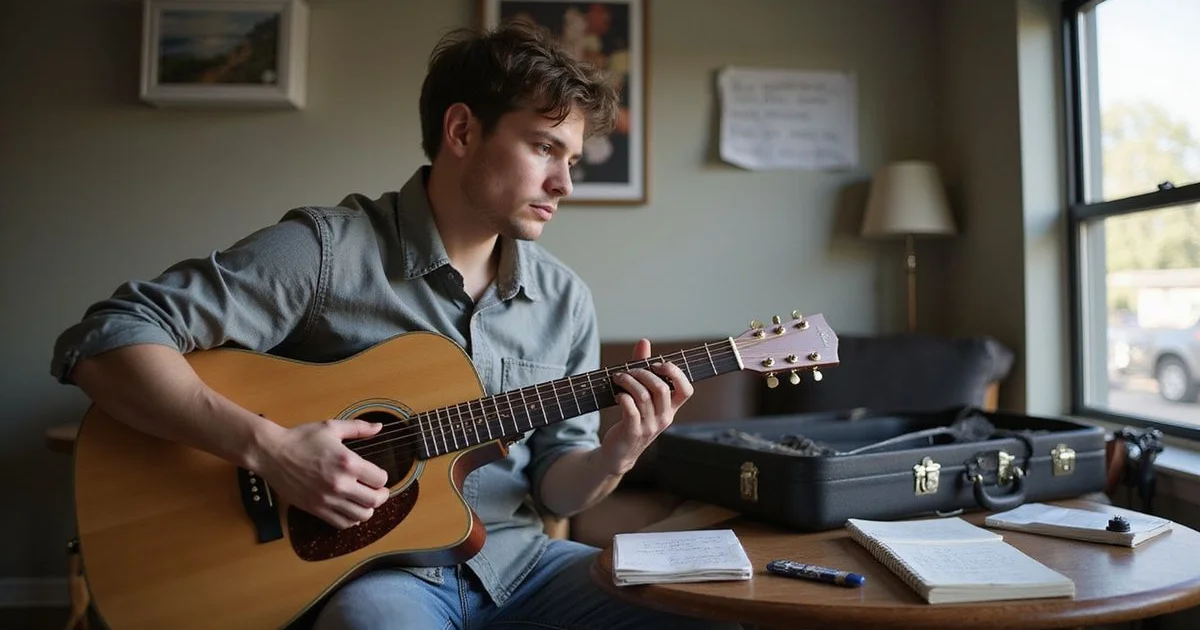
There are two things you can do with a guitar in your hands, and only one of them is practice.
Playing is running through the songs and riffs you already know. It’s enjoyable, it’s why you started, and you should keep doing it.
Practising is working on the specific thing you currently can’t do. It’s slower, less satisfying in the moment, and it’s the entire source of progress.
Most people who feel stuck are playing and calling it practice. That’s the whole diagnosis in one sentence, and separating the two is the first habit beginner guitar lessons set up.
What Deliberate Practice Looks Like
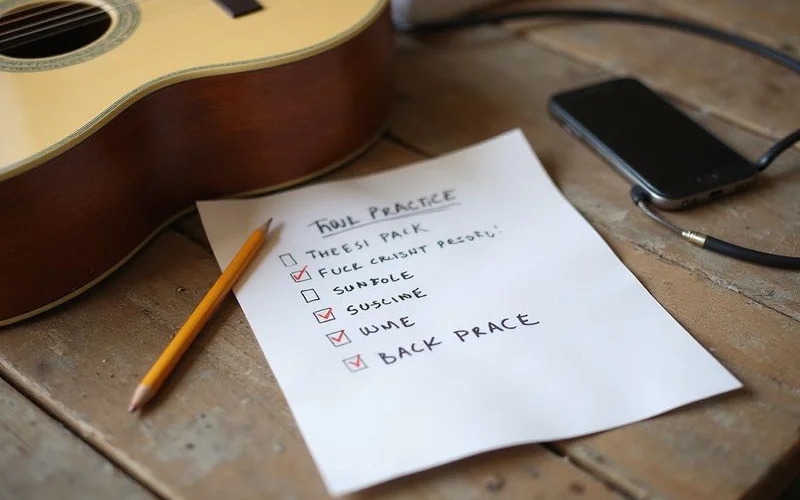
Four properties. If your session has all four, it’s practice.
A specific target. Not “get better at chords.” The change from one named chord to another, landing cleanly on the beat. One target per session is plenty.
Slow enough to notice. If you can’t tell which finger arrives late, you’re going too fast to learn anything. Speed is a result, not a method.
Immediate correction. Notice the fault, adjust, repeat. Ten attentive repetitions beat fifty absent ones, and the absent fifty actively reinforce the error.
A measurable finish. “Clean twice in a row at 60bpm” is a finish line. “Practised for a while” isn’t.
The honest test
After a session, can you name the one thing that got better? If not, you played. That’s fine, just don’t count it as practice.
A Real Twenty Minutes
| Segment | Time | What happens |
|---|---|---|
| Warm-up | 2 min | Tune, loosen hands, reset your ear |
| The target | 10 min | One thing from your recap, slow and deliberate |
| Application | 5 min | Put it in a song so it isn’t an isolated drill |
| Play for fun | 3+ min | Not practice. Still important. |
The application step gets skipped constantly and it’s what makes the work stick. A drill that never enters a song stays a drill.
Where Theory Fits
Applied theory belongs in the same session as the thing it explains. Learn why the three chords in your song sound finished together, then play the song and hear it. That’s a two-minute detour that turns a memorised sequence into something you understand and can transfer.
Theory studied separately from playing is the version everyone bounces off, which is exactly why it’s never assigned as homework here.
A Worked Example
Say the target is switching cleanly between two chords in a song you’re learning.
Wrong: play the song from the top, ten times, wincing at the same spot each time. That’s twenty minutes of rehearsing a stall.
Right: take the two chords out of the song. Change between them slowly, watching which finger arrives last. Two minutes of that, then add a metronome at a tempo where it’s clean. Raise the tempo only after two clean repetitions. Then put it back in the song and see whether it holds. The full drill is in chord changes too slow.
Same twenty minutes, entirely different outcome. The difference is isolating the problem instead of running past it.
What to Do When Nothing Improves
Some sessions produce nothing visible. That’s normal, and there are two useful responses.
Slow down further. Almost every stuck passage is being practised faster than it can be played accurately, and halving the tempo often solves in five minutes what a week of repetition didn’t.
Or leave it. Motor learning consolidates during sleep, and a passage that felt impossible on Thursday is frequently easier on Friday without any additional work. Grinding at it while frustrated tends to build tension into the movement, which is a new problem on top of the original one.
How Lessons Keep It Honest
Two mechanisms.
The written recap after every lesson names the target, the tempo, and what success sounds like. That removes the guesswork that turns twenty good minutes into twenty vague ones.
The weekly check is the other half. Someone hearing you play next week is a strong incentive, but more importantly they can tell whether the practice worked or whether you’ve been reinforcing a fault. Self-assessment is unreliable precisely where it matters most.
That’s the core promise of beginner guitar lessons, not more discipline, just less wasted effort. For the longer version aimed at adults who’ve already lost years to unfocused practice, see practice that sticks.